
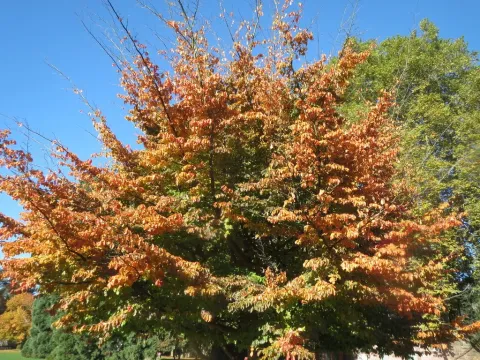
Persian ironwood
Parrotia C. A. Mey.
Persian ironwood (Parrotia persica) is a unique deciduous tree belonging to the Hamamelidaceae family. It is a relict species native to the Alborz mountains in Iran and parts of Azerbaijan.
What the section contains

Persian ironwood
The plant thrives in humid subtropical environments but demonstrates remarkable resilience, adapting to various climatic zones including temperate regions with cold winters.
Optimal growth requires deep, well-drained, and nutrient-rich soils. The tree prefers slightly acidic to neutral soil pH and is sensitive to heavy, compacted soils that inhibit root oxygenation.
Regarding sunlight, young saplings benefit from partial shade, while mature specimens require full sun to develop their dense, wide-spreading canopy and vibrant seasonal foliage.
Regular irrigation is essential during the early stages of establishment, especially in areas with distinct dry seasons, to maintain soil moisture levels and promote vigorous growth.
The wood of the Persian ironwood is globally renowned for its extreme density and hardness, earning the tree its common name. It is significantly heavier than water, causing it to sink.
Historically, this wood was highly valued for making durable tools, machine parts, and heavy-duty structural elements due to its resistance to decay and mechanical wear.
Given the slow growth rate of the species, its commercial use for timber production is rare, often limited to specialized artisanal or ornamental woodcraft applications.
In modern landscape architecture, the yield of this crop is measured in its aesthetic and ecological benefits, providing long-term value as a specimen tree in parks and gardens.
Propagation is primarily achieved via seeds, which require stratification to overcome dormancy, or through vegetative methods such as softwood cuttings in professional nursery settings.
Persian ironwood is generally considered a low-maintenance plant with strong natural defenses against most common tree pests and pathogens.
Potential threats include aphids or mites that may infest the foliage during exceptionally hot and dry spells, though these rarely pose a risk to the tree's overall survival.
Physiological stress caused by sudden environmental changes, particularly extreme drought or flooding, is the primary factor that can lead to crown dieback or bark necrosis.
In certain regions, young trees can be susceptible to damage from deer or other small mammals that rub against the trunk, requiring protective measures during the early years.
Maintaining a clean, well-mulched environment around the root zone helps preserve soil moisture and health, reducing the likelihood of stress-related susceptibility to secondary infections.