
Large fothergilla
Fothergilla latifolia
Description
Growing requirements
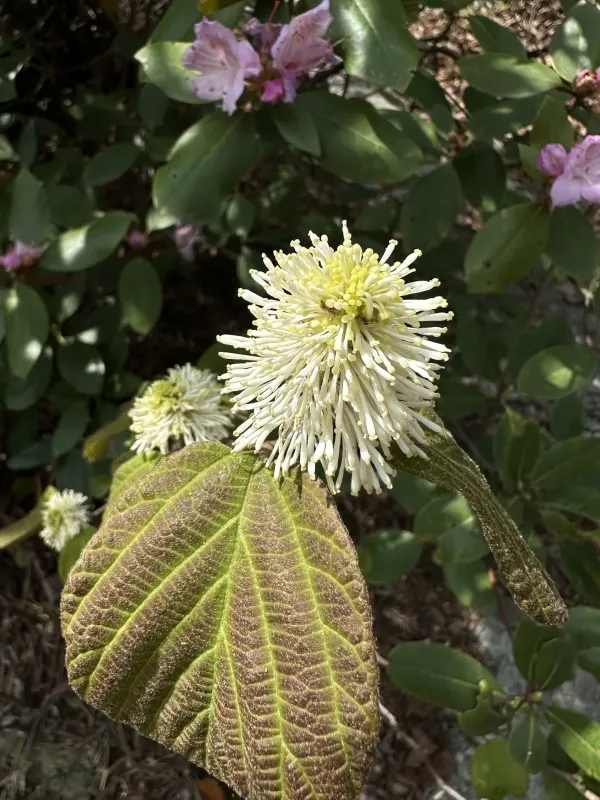
Large fothergilla (Fothergilla major), also known as mountain witch-alder, is a member of the Hamamelidaceae family. It is a slow-growing, deciduous shrub famous for its spectacular autumn foliage and fragrant, bottle-brush-like flowers.
Native to the southeastern United States, this species thrives in woodland environments. It requires consistent moisture and a cool root zone, making it a demanding plant for regions with dry summers or intense heat.
Soil conditions are critical for successful cultivation; the plant strictly requires acidic, humus-rich, and well-draining soil. It will fail to thrive in clay-heavy or alkaline environments where nutrient uptake is blocked.
Gardeners must prioritize the use of organic mulch such as pine needles or wood chips to mimic forest conditions and maintain soil acidity and moisture levels throughout the growing season.
Propagation is typically done through semi-hardwood cuttings during late summer or by layering. Success rates are significantly higher when using growth hormones and a controlled misting environment.
Main diseases and pests
This culture is remarkably resistant to major plant pests and diseases, provided that its strict ecological requirements are met during the planting and establishment phases.
The primary concern is root rot, which occurs if the soil is poorly drained or if the plant is subjected to prolonged waterlogging during the dormant season.
Chlorosis is a common physiological disorder observed when the shrub is planted in incorrect soil pH. It manifests as yellowing leaves while the veins remain green, indicating iron deficiency.
Occasional infestations of spider mites may occur during hot and dry spells. Regular misting of the foliage and ensuring adequate soil moisture are the best preventative measures against these pests.
There are no significant viral or bacterial threats specifically targeting Fothergilla major, provided that standard nursery sanitation practices are maintained and plant spacing is sufficient for airflow.