
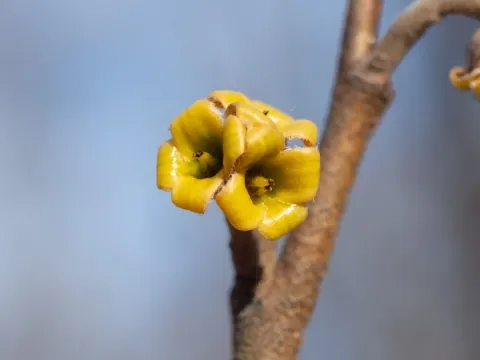
Large-leaved witch hazel
Hamamelis macrophylla
The Large-leaved witch hazel (Hamamelis macrophylla) is a unique species belonging to the Hamamelidaceae family. This deciduous shrub is prized by gardeners for its impressive foliage size and distinct growth habit, which adds texture and interest to any botanical collection.
What the section contains
Large-leaved witch hazel
Originating from the woodlands of North America, this plant is well-adapted to temperate climates. In its natural habitat, it thrives in protected areas where the soil remains consistently moist but not waterlogged, often found near forest edges or stream banks.
Successful cultivation requires a fertile, slightly acidic to neutral soil that provides excellent drainage. Because the root system is relatively shallow, planting in a location with high organic matter content will promote stronger growth and better drought tolerance.
When choosing a site, opt for partial shade. While the shrub can tolerate some direct sun in cooler regions, it generally performs best when shielded from the intense afternoon heat, which can otherwise scorch the leaves and desiccate the root zone.
Cultural practices should emphasize consistent hydration during dry periods. Applying a layer of organic mulch, such as wood chips or pine needles, around the base of the plant is essential to retain soil moisture and regulate temperatures around the roots.
The Large-leaved witch hazel is generally hardy, but it can be susceptible to specific environmental stresses. Phyllosticta leaf spot is a common fungal issue that manifests as dark lesions on the foliage, typically during periods of prolonged wet weather.
Aphids are the most frequent insect pests encountered on this species. They cluster on the undersides of leaves and on new growth, potentially causing curling and stunted development if infestations are left unchecked by gardeners.
Powdery mildew may occur if the shrub is planted in an area with poor airflow or high humidity. Ensuring proper spacing during the initial planting phase helps to minimize this risk and promotes the overall health of the shrub.
Root rot is a critical threat often caused by improper drainage or excessive soil compaction. Gardeners must ensure that water moves away from the root crown, especially in heavier soil types, to prevent irreversible damage.
Management of these threats involves a combination of preventative pruning to improve air circulation and targeted applications of fungicides or insecticidal soaps. Keeping the base of the shrub clean of debris also reduces the habitat for potential pests.