
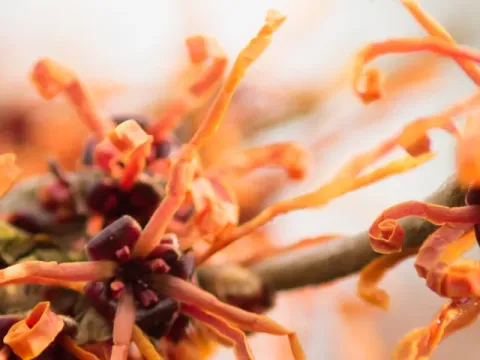
Hamamelis hybrid
Hamamelis hybrids
Hamamelis hybrid (Hamamelis x intermedia) belongs to the Hamamelidaceae family and is a prized ornamental shrub renowned for its unique, fragrant, ribbon-like flowers that bloom in winter. It is a complex hybrid derived from crosses between Hamamelis mollis and Hamamelis japonica.
What the section contains
Hamamelis hybrid
This crop thrives in sunny to partially shaded locations with well-drained, slightly acidic to neutral soils. Exposure to full sun is beneficial for flower bud development, but in regions with scorching summers, afternoon shade is essential to protect the foliage.
Proper soil preparation is crucial; adding organic matter such as peat or well-rotted compost helps improve moisture retention while ensuring adequate drainage. Heavy clay soils should be amended with organic material to prevent root rot, as the plant does not tolerate waterlogging.
Agrotechnical maintenance includes consistent mulching, which helps stabilize soil temperature and conserve moisture. Fertilizer applications should be balanced and applied in early spring to support vigorous growth throughout the season.
Pruning should be done sparingly and only immediately after flowering. The plant has a naturally elegant, spreading habit, so regular maintenance is largely limited to removing dead or crossing branches to maintain the desired structure and aesthetic appeal.
Generally, the Hamamelis hybrid is a low-maintenance, hardy plant with few significant health concerns. However, in poorly ventilated or excessively humid environments, the plant may occasionally be affected by powdery mildew or leaf spot diseases.
Insect pests such as aphids can occasionally colonize young shoots during the spring growth phase. Maintaining plant vigor through proper nutrition and regular garden monitoring is usually sufficient to manage these threats without intensive chemical intervention.