
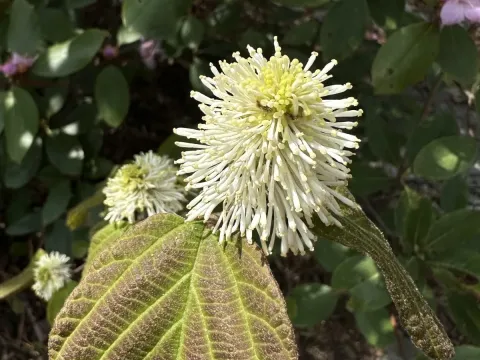
Fothergilla
Fothergilla L.
Fothergilla (lat. Fothergilla L.) is a genus of deciduous shrubs belonging to the Hamamelidaceae family. Native to the southeastern United States, these plants are primarily found in moist woodland areas, which dictates their specific environmental preferences.
What the section contains

Fothergilla
Cultivation of Fothergilla requires acidic, well-drained, and organic-rich soils. The ideal pH range is between 5.0 and 6.5. Alkaline soils can cause severe nutrient deficiencies, preventing the shrub from thriving and maintaining its characteristic foliage color.
The plant performs best in full sun to partial shade. While it can survive in shade, exposure to direct sunlight is essential for achieving the most spectacular autumn foliage, which can turn shades of yellow, orange, and brilliant crimson.
Proper water management is critical for this species. Since the root system is fibrous and shallow, it is highly sensitive to drought. Consistent irrigation and a thick layer of organic mulch are necessary to maintain soil moisture levels throughout the growing season.
Fothergilla is known for its hardiness, but it requires protection from harsh, drying winds in colder climates. In regions with severe winters, it is recommended to apply a generous layer of mulch around the base to insulate the roots and prevent frost heave.
Fothergilla is generally resistant to pests and diseases, provided that its site requirements are met. The most common issue is chlorosis, a yellowing of the leaves caused by high pH levels that inhibit the absorption of iron and other vital microelements.
Pests like aphids or spider mites may occasionally infest the plant, usually during periods of intense heat and drought stress. Maintaining optimal plant vigor through proper watering is the most effective way to prevent these infestations from occurring.
Root rot is a potential threat, especially in sites with poor drainage or heavy, waterlogged soils. Ensuring that the planting site provides adequate aeration and moisture regulation is crucial for the long-term health of the shrub.
Regular monitoring of the foliage is advised to identify early signs of pathogens. Should any issues arise, localized treatment with appropriate horticultural oils or fungicides is usually sufficient to manage the situation effectively.
- Maintain proper spacing between plants to ensure good air circulation.
- Prune dead or diseased branches annually during the dormant season.
- Avoid overhead watering to prevent leaf spot diseases.
- Monitor soil pH levels every spring.
- Apply balanced organic fertilizers if nutrient deficiency is detected.