
Fothergilla hybrid
Fothergilla hybrids
Description
Growing requirements
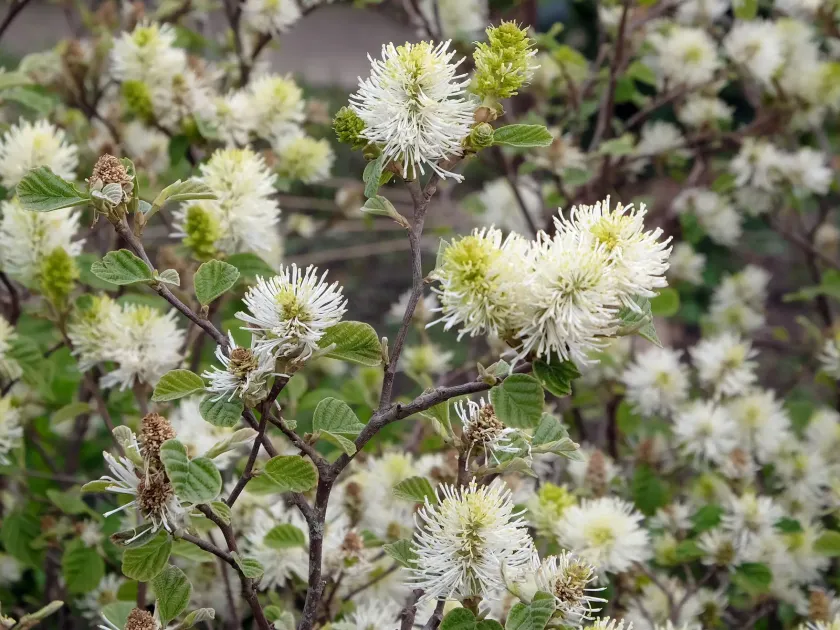
The Fothergilla hybrid (Fothergilla × intermedia) is an ornamental deciduous shrub belonging to the Hamamelidaceae family. It is a prized garden specimen known for its unique bottlebrush-shaped white flowers and spectacular autumn foliage colors that range from vibrant yellow to deep crimson.
The successful cultivation of this crop depends primarily on soil composition. Fothergilla requires acidic or slightly acidic soil that is rich in organic matter. Proper drainage is non-negotiable, as the roots are highly sensitive to waterlogging, which often leads to severe physiological stress.
Regarding climatic requirements, these plants thrive in locations with full sun to partial shade. While they can tolerate shade, full sun exposure is generally preferred to maximize the floral display and ensure the most vivid autumn leaf coloration, provided that adequate soil moisture is maintained.
Agrotechnical maintenance focuses on consistent irrigation. During dry summer periods, deep watering is essential to prevent root desiccation. The use of mulch, such as pine bark or composted peat, is highly recommended to regulate soil temperature and maintain the required acidity levels.
Fertilization should be handled with caution; the plant performs best with slow-release fertilizers specifically designed for acid-loving shrubs. Avoiding high-pH additives or lime is crucial, as they can quickly lead to nutrient deficiencies and leaf chlorosis.
Main diseases and pests
Fothergilla is generally considered a low-maintenance plant with strong resistance to most common shrub diseases. The primary risk factor remains improper drainage, which can invite Phytophthora root rot if the soil remains saturated for extended periods.
Insect pests are rarely a major concern, although spider mites may occasionally infest the plant during prolonged heatwaves or periods of extreme drought. Early detection and keeping the plant well-hydrated are the most effective strategies for managing these sporadic pest outbreaks.