
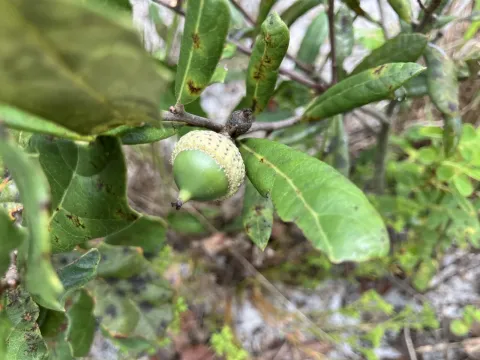
Dwarf oak
Quercus minima
The dwarf oak (Quercus minima) is a unique shrub belonging to the Fagaceae family, native to regions characterized by sandy soil conditions. Unlike typical oak species, this plant grows in a low-spreading, thicket-forming habit.
What the section contains
Dwarf oak
This species requires full sun exposure to thrive and maintain its dense growth pattern. It is highly adapted to nutrient-poor soils, making it an excellent choice for sites where the soil quality is suboptimal for larger tree species.
Climatic adaptability is one of its core strengths, although it performs best in well-drained, sandy substrates that prevent root rot. It is not tolerant of waterlogged areas, so site selection should prioritize elevation and drainage.
Cultural management involves regular monitoring of moisture levels during the establishment phase. Pruning should be kept to a minimum, focusing only on removing deadwood to maintain the natural, compact structure of the plant.
Its primary agricultural and utility function lies in land restoration and erosion control. The robust root system is highly effective in stabilizing sandy slopes and preventing soil displacement in coastal or inland sandy regions.
Powdery mildew is the most frequent fungal issue affecting this shrub, especially in stagnant, humid environments. Maintaining good spacing is essential to ensure proper air circulation and reduce infection risk.
Insects like leaf rollers and various gall-forming species can cause aesthetic damage to the foliage. Integrated pest management strategies, focusing on biological controls, are recommended for maintaining plant health.
Root rot, driven by improper drainage, poses a severe threat to the long-term survival of the dwarf oak. Ensuring the planting site is elevated or modified for water runoff is a preventative necessity.
Anthracnose can emerge during excessively wet springs, manifesting as leaf spotting. Regular inspection and prompt removal of fallen debris are standard practices to keep the plant in a healthy condition.
Environmental stress from drought or nutrient deficiency can predispose the plant to secondary infestations by wood-boring beetles. Providing a balanced fertilizer and appropriate mulch helps maintain plant vigor.