
Deam's Oak
Quercus deamii
Description
Growing requirements
Deam's Oak (Quercus deamii) is a recognized natural hybrid originating from the cross-pollination between the white oak (Quercus alba) and the chinkapin oak (Quercus muehlenbergii). This species is classified under the Fagaceae family and holds significant interest for botanical studies.
This culture thrives in well-drained, fertile soils that provide sufficient nutrient content for robust development. It performs best in temperate zones where moderate rainfall and ample sunlight promote consistent growth and structural integrity of the canopy.
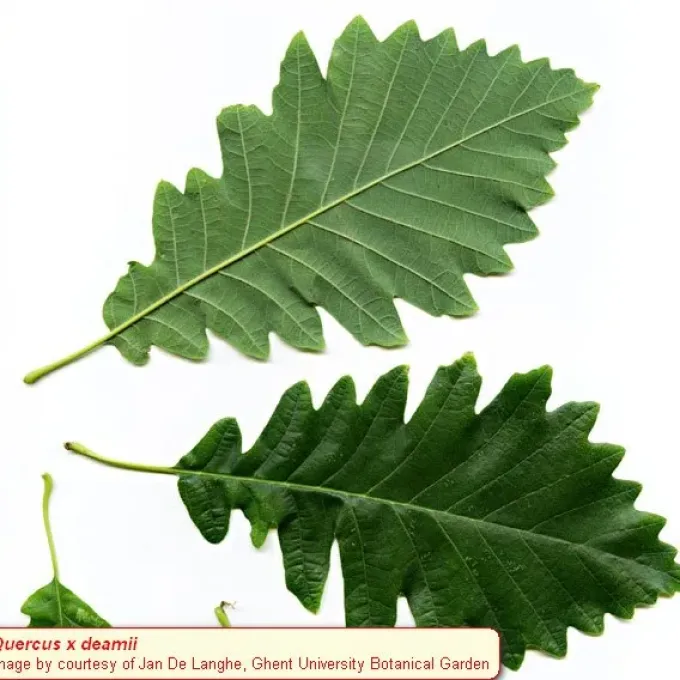
The botanical profile of the tree includes a unique leaf structure that serves as a diagnostic feature for identification. Its growth rate is generally stable, though it requires sufficient spacing from surrounding vegetation to ensure proper airflow and light penetration.
In terms of silvicultural management, young specimens require protection from excessive desiccation and extreme wind during their establishment phase. Soil pH management is recommended if the substrate leans towards high acidity, as the species prefers neutral conditions.
The primary utility of the species lies in its contribution to biodiversity and its decorative value in arboretums. Its wood shares the high-density characteristics of its parent species, providing potential utility in high-quality carpentry and specialized woodcraft.
Main diseases and pests
Common pathological issues include powdery mildew, which can affect leaf quality in humid environments. Proper site selection and site preparation are critical to minimize the impact of such fungal conditions.
Pest threats primarily involve foliage-feeding insects and various wood-boring beetles that target stressed trees. Integrated pest management, including regular inspections and the removal of deadwood, is essential for maintaining tree health and vigor.