
Emory oak
Quercus emoryi
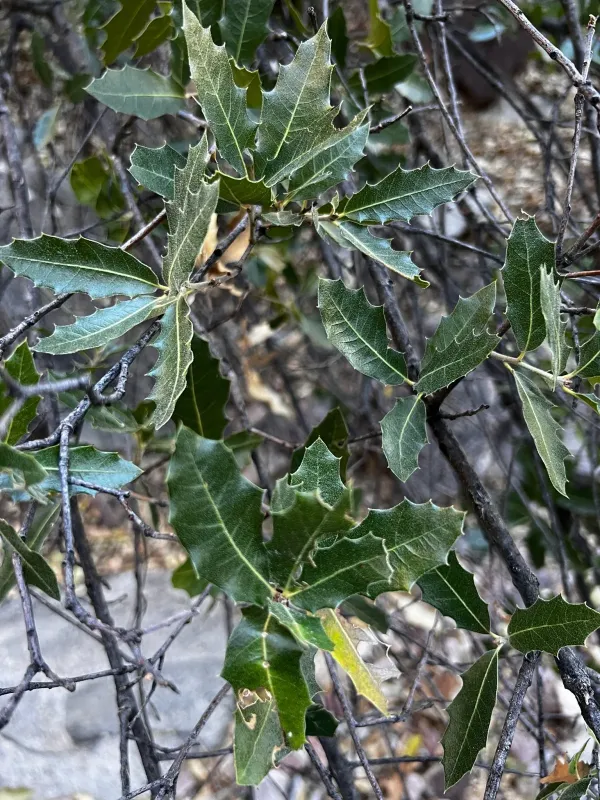
Description
Growing requirements
The Emory oak (Quercus emoryi) is an evergreen tree belonging to the Fagaceae family, native to the arid regions of North America. It is renowned for its exceptional resilience to heat and dry climates, making it a valuable species for xeriscaping and sustainable forestry.
The tree thrives in well-drained, often rocky or gravelly soils. It is highly adapted to high-solar exposure environments and requires minimal soil fertility to maintain steady growth, which is typically slow compared to other oak species.
Climatic requirements focus on mild winters and warm, dry summers typical of the Southwestern United States and Northern Mexico. It is not cold-hardy in extremely frosty regions and performs best in arid to semi-arid zones.
Agrotechnical management is relatively simple, primarily focusing on protecting young trees during their establishment phase. Once mature, the Emory oak requires little to no intervention to sustain its health.
Due to its tolerance for alkaline soil conditions, the Emory oak is an ideal candidate for reclaiming degraded lands where other common trees may struggle to survive.
Yield
The Emory oak is economically significant for its acorns, which are relatively low in tannins, making them a traditional food source for both humans and livestock throughout its native range.
Yields of acorns can be substantial in mature trees, providing a critical late-season food source for wildlife and domestic cattle when pasture forage is scarce.
The wood of Quercus emoryi is exceptionally hard, dense, and durable. It is highly valued for artisanal woodworking, fence posts, and as an high-quality fuelwood source.
Harvesting is facilitated by the tree's biological cycle; as a member of the black oak group, acorns mature within a single season, allowing for predictable annual harvesting schedules.
Beyond wood and food, the species provides excellent shade and soil stabilization benefits, which adds inherent value to agricultural properties managing livestock or soil erosion.
Main diseases and pests
Fungal pathogens associated with root rot are the primary threat, usually triggered by poor drainage or excessive irrigation, which encourages anaerobic conditions around the roots.
Insect pests, particularly weevils, pose a consistent risk to acorn crops. Infestations can significantly reduce the viability of seeds for both reproduction and human consumption.
Overgrazing by domestic livestock is a major environmental challenge for young Emory oak populations, as intense herbivory prevents natural recruitment and canopy development.
Parasitic plants like mistletoe can infest mature trees, drawing nutrients from the branches and increasing the tree's vulnerability to secondary environmental stressors.
Good management practices, such as maintaining appropriate tree spacing and monitoring for early signs of canopy infestation, are crucial for long-term health and productivity.