
Dwarf chinkapin oak
Quercus prinoides
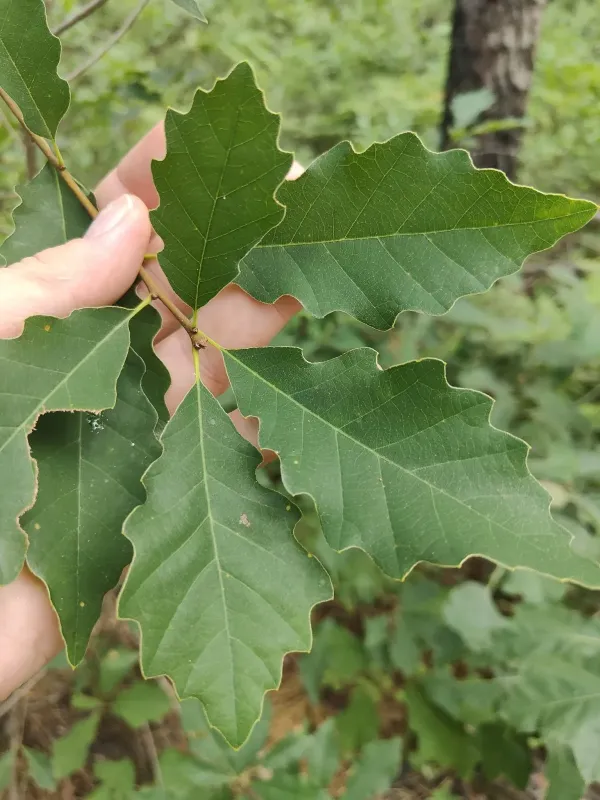
Description
Sowing dates
Propagation of the dwarf chinkapin oak is most effective when sowing acorns immediately after their maturation in the autumn. This allows the seeds to undergo natural stratification in the soil over winter, which significantly increases germination rates in the spring.
If spring sowing is required, acorns must be stored in a cool, moist substrate, such as sand or sawdust, at temperatures between 0 and +5 degrees Celsius. It is crucial to prevent the seeds from drying out, as they lose their viability very rapidly.
Seeds should be sown at a depth of 3 to 5 centimeters, maintaining a distance of at least 60 to 80 centimeters between rows to ensure proper root development for the young seedlings. The soil must be well-prepared, weed-free, and moderately moist.
Seedlings emerge quickly once sustained warmth arrives, although they develop slowly in their first year, focusing primarily on growing a strong taproot. During this time, maintaining optimal soil moisture levels is critical for success.
Transplanting to a permanent location is recommended at 1–2 years of age, as the species is sensitive to root damage. Planting holes should be deep enough to accommodate the long taproot without bending it.
##requirements##The dwarf chinkapin oak belongs to the Fagaceae family and is a low-growing deciduous shrub or small tree, reaching a maximum height of 3 to 5 meters. In its native range, it is primarily found in the eastern and central regions of North America.
This species thrives in well-drained, sandy, or rocky soils and is often encountered on dry slopes, prairies, and forest edges. It exhibits high tolerance to drought conditions, making it a promising candidate for reforestation on poor, degraded soils.
Full sun exposure is required for healthy growth; in shaded conditions, the crown becomes sparse, and fruit production decreases significantly. The shrub is known for its excellent cold hardiness, typical of temperate climate zones.
The dwarf chinkapin oak has moderate soil pH requirements, growing well in both neutral and slightly acidic conditions. It is important to avoid waterlogged sites, as excessive moisture can lead to root rot and other physiological issues.
Agronomic management includes mulching the base of the plant to retain moisture and suppress weeds. Regular mineral fertilizer applications in the early years accelerate growth and improve the shrub's overall resilience to environmental stressors.
##yield##The primary economic use of the dwarf chinkapin oak is the harvesting of edible acorns, which are noted for having lower tannin content compared to many other oak species. This makes them a more palatable food source.
Fruiting begins at a relatively early age, often as soon as 3 to 5 years after planting, which is significantly faster than many larger tree species. This makes it an interesting candidate for specialized orchards or permaculture setups.
A mature shrub can produce a substantial volume of acorns in good years, serving as a vital food resource for local wildlife or as a potential wild-harvested food crop after appropriate processing.
The acorns are oval-shaped and ripen within a single growing season, detaching easily from the cap when fully mature. Harvesting usually takes place in late summer or early autumn, depending on local climate conditions.
Overall productivity is closely linked to light levels and general maintenance. With proper care, the dwarf chinkapin oak provides reliable yields over many years, contributing to local ecosystem diversity and productivity.
##threats##Powdery mildew is a common disease affecting this species, particularly attacking young leaves under high humidity or poor air circulation conditions. Improving site ventilation is the best preventative measure.
Root rot issues may arise from persistent soil saturation or inadequate drainage. Preventing water stagnation is essential for maintaining a healthy root system and avoiding long-term physiological decline.
The most significant pests are acorn-feeding insects, such as weevils. Infested acorns are rendered unsuitable for seed or food use, necessitating effective monitoring and management strategies during the fruit-ripening phase.
Leaf-eating insects, including various caterpillar species, can compromise the shrub's aesthetic appeal and vigor if outbreaks occur. In severe cases, targeted contact or systemic insecticides may be necessary to manage these populations.
Effective management includes practicing site cleanliness and removing fallen debris, which may harbor pests or pathogens over the winter. Maintaining distance between individual plants also helps reduce the spread of airborne spores.
##harvest##Acorn harvesting is primarily done by hand as the fruit falls to the ground, a process that usually occurs from August to September depending on the local geographical region.
Once collected, the acorns require immediate cleaning and sorting, as they are susceptible to rapid spoilage and mold if left in damp piles or containers.
For long-term storage, the nuts must be dried in a well-ventilated area or under a shed roof until the internal moisture content is sufficiently reduced to prevent degradation.
If the goal is food production, the acorns must be leached in water to remove residual tannins, after which they can be roasted, ground into flour, or processed into other culinary products.
When storing acorns intended for propagation, it is essential to maintain a stable, cool temperature to ensure viability until the next sowing season begins.