
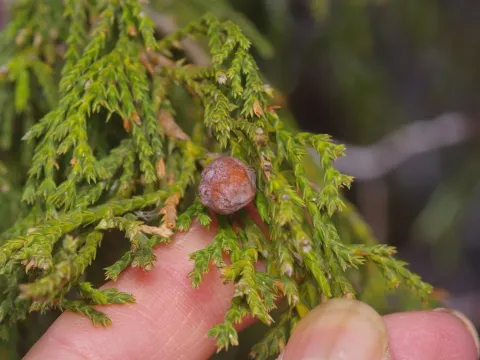
Drooping juniper
Juniperus flaccida
The drooping juniper (Juniperus flaccida) is a distinct species within the Cupressaceae family, recognized for its elegant, weeping habit. This evergreen tree can grow to significant heights, displaying pendulous branches that make it a centerpiece in botanical collections.
What the section contains
Drooping juniper
Native to the mountains of Mexico and parts of Texas, USA, this species has evolved to thrive in arid and rocky environments. Its natural habitat is characterized by well-drained slopes and distinct seasonal variations, which define its survival strategy.
Regarding soil requirements, the plant demands excellent drainage to prevent root rot. While it is adaptable to various soil pH levels, it performs best in gritty, rocky substrates that mimic its native mountain terroir and prevent water accumulation around the collar.
This species requires full sun exposure to maintain its dense foliage and unique weeping form. Insufficient light leads to etiolation, where branches become sparse and weak, significantly diminishing the tree's architectural value in a landscape setting.
Agrotechnical care includes minimal fertilization, as this species is adapted to nutrient-poor soils. Over-fertilization can lead to excessively rapid growth, making the branches more susceptible to breakage under their own weight or during strong winds.
One of the primary threats to Juniperus flaccida is the incidence of cedar-apple rust. This fungal disease creates visible galls on branches, particularly during wet springs, which can lead to branch dieback and overall decline in tree health.
Spider mites represent a major pest risk, especially in hotter, drier regions. These tiny arachnids feed on the sap of the foliage, resulting in a yellow, stippled appearance. If left unmanaged, heavy infestations can cause extensive needle loss.
Bark beetles can also impact the tree, particularly when the juniper is already stressed by drought or improper environmental conditions. Their galleries disrupt the flow of nutrients within the trunk, which can be fatal if the infestation is widespread.
Integrated pest management (IPM) is crucial for maintaining the health of drooping junipers. This involves monitoring for early signs of pests, promoting beneficial insect populations, and applying selective chemical treatments only when absolutely necessary.
Maintaining proper airflow within the canopy is a key cultural practice to mitigate fungal growth. Regular pruning of congested areas helps lower the internal humidity level, thereby reducing the probability of pathogen establishment in the foliage.