
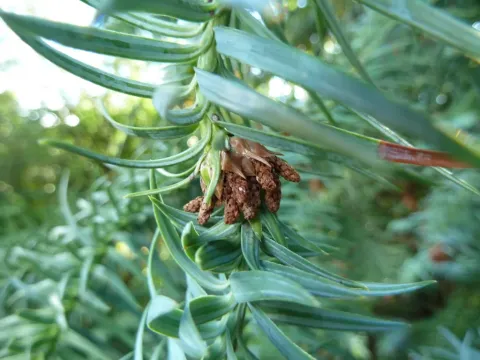
Cunninghamia
Cunninghamia
Propagation of Cunninghamia is most commonly achieved through seed sowing or cuttings within controlled nursery environments. Seeds are typically sown in early spring when soil temperatures reach stable positive values to ensure germination.
What the section contains

Cunninghamia
To accelerate the germination process, cold stratification in a moist medium for 30–60 days is recommended. This practice significantly increases seedling emergence uniformity and overall success rates.
Cuttings are preferred when the goal is to maintain the genetic characteristics of specific high-performing clones. Young saplings require consistent moisture and partial shading during the initial months after transplanting.
Success is highly dependent on using lightweight, well-draining substrates with an acidic or slightly acidic pH. Waterlogging during the germination stage must be avoided to prevent root rot.
The optimal timing for outplanting to permanent reforestation sites is during the plant's dormant period, usually in early spring before the start of active sap flow.
Cunninghamia is a member of the Cupressaceae family, naturally occurring in the subtropical forests of East Asia. It has specific requirements for high air humidity and consistent annual rainfall.
The species prefers deep, fertile, and loose soils. While generally adaptable, it does not tolerate liming, which elevates soil pH and inhibits the uptake of essential micronutrients, leading to chlorosis.
Moderate temperatures are ideal. While mature trees can tolerate brief frost periods, prolonged freezing temperatures combined with cold, desiccating winds may cause damage to apical shoots.
Cunninghamia requires high levels of sunlight for rapid growth, although young trees benefit from protection against intense midday sun to prevent scorching during the establishment phase.
Routine fertilization with nitrogen-phosphorus blends during the first few years of growth helps build a strong root system and ensures the rapid annual stem increment necessary for timber production.
The economic value of Cunninghamia stems from its exceptional growth rate. In plantation forestry, it is considered one of the most productive tree species in its native range.
Cunninghamia wood is prized for its natural resistance to decay, its lightweight nature, and excellent resonance properties. It is widely utilized in construction, furniture manufacturing, and paper production.
Plantation efficiency relies heavily on spacing density; with intensive management, trees reach harvestable trunk dimensions 15–20 years sooner than those in natural forest stands.
The species possesses the ability to regenerate via stump sprouts, which allows for multiple timber harvest cycles without the need for immediate replanting of nursery seedlings.
The average annual biomass yield per hectare for a well-managed Cunninghamia plantation significantly outperforms many local conifer species, making it a highly profitable investment.
Adelgids represent one of the most significant pest threats, infesting needles and young shoots, often leading to structural deformity. Regular field inspections are vital for early detection.
Fungal pathogens, including needle cast and various root rots, often emerge due to poor management practices, particularly in areas with excessive soil moisture or restricted aeration.
In high-density plantations, wood-boring insects may spread rapidly, targeting stressed or weakened trees. Implementing prompt sanitary logging of infected individuals is essential for stand health.
To prevent disease outbreaks, it is recommended to maintain proper spacing between trees to ensure adequate airflow within the forest canopy, reducing humidity levels that favor fungus.
While systemic insecticides and fungicides are effective for localized control, large-scale operations emphasize preventative silviculture and biological pest management strategies.