
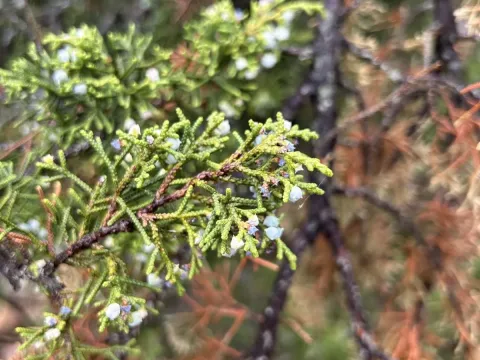
Durango juniper
Juniperus durangensis
Durango juniper (Juniperus durangensis) is a member of the Cupressaceae family. This evergreen species is native to the high-altitude mountainous regions of Mexico, primarily found in the state of Durango, where it thrives in challenging ecological niches.
What the section contains
Durango juniper
The species is highly drought-tolerant, adapted to semi-arid environments. It requires well-drained, porous soils; compacted or heavy clay soils that retain moisture will often lead to root rot and eventual death of the specimen.
Regarding light requirements, this juniper demands full sun exposure. Adequate light is critical for maintaining the dense foliage structure and the specific coloration characteristic of the species; shade leads to sparse growth and loss of architectural shape.
Temperature tolerance is a limiting factor for this plant. While it originates from high elevations, it is not fully hardy in extremely cold climates. In zones with harsh winters, protective measures such as mulching or container cultivation are advisable.
Cultural practices include occasional light fertilization and pruning to maintain shape. However, minimal intervention is usually preferred to preserve the natural growth habit of the tree, which is highly valued in its native habitat.
Fungal diseases remain the primary threat to the health of the Durango juniper. Problems such as rust or blight often occur in environments with high humidity or poor airflow around the canopy.
Insects, particularly spider mites and scale insects, are common pests that feed on the foliage and sap. These pests can cause significant yellowing and needle drop if left unmanaged.
Management strategies involve regular monitoring and the use of targeted acaricides or systemic insecticides when infestation levels exceed the economic threshold for the specimen.
Good horticultural hygiene is essential: remove and destroy any infected branch tips promptly to prevent the spread of fungal spores during the growing season.
Creating a balanced landscape environment with adequate spacing between plants is the most effective preventative measure against the rapid spread of pests and diseases.