
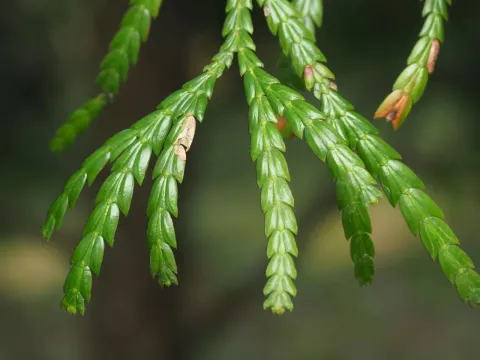
Fokienia
Fokienia
Fokienia is a genus of evergreen coniferous trees belonging to the family Cupressaceae. It is a monotypic genus, represented solely by the species Fokienia hodginsii.
What the section contains

Fokienia
The native range of this species covers the mountainous regions of Southeast Asia, including Vietnam, Laos, China, and Myanmar. It thrives in humid, subtropical climates characterized by frequent mist and rainfall.
Cultivation of Fokienia requires deep, fertile, and well-drained soils. As the species is highly susceptible to root rot, sites with natural slope drainage are preferred to prevent water stagnation.
The species is known for its relatively slow growth rate in the early stages, necessitating careful shading and protection from harsh direct sunlight during the nursery phase.
Propagation is typically achieved through seeds sown in controlled greenhouse conditions or via vegetative propagation methods like stem cuttings to ensure consistent genetic quality.
The primary economic use of Fokienia is its high-quality timber, which is highly valued in construction and fine woodworking due to its durability and resistance to decay.
The wood is also a source of aromatic essential oils. These extracts are harvested sustainably for use in the fragrance industry and traditional medicinal applications.
In modern forestry, harvesting cycles are planned to align with the tree's maturity, ensuring that the ecological balance of the plantation area is maintained.
Beyond timber production, Fokienia is increasingly cultivated for its aesthetic appeal in botanical gardens and large-scale landscape projects within suitable climatic zones.
Strategic management of plantations involves rotational harvesting, which supports both the yield of raw materials and the long-term conservation of the species.
Major threats to the species include over-exploitation and habitat loss resulting from deforestation and changes in land use in mountain areas.
Pathogenic fungi represent a significant biological threat, often manifesting as root rots when plants are grown in heavy or poorly drained clay-based soils.
Pest pressure from aphids and mites can jeopardize the health of young saplings, requiring integrated pest management strategies to maintain plant vigor.
Environmental stressors such as prolonged drought and increased temperature volatility significantly affect the survival rates of young Fokienia populations.
International and local regulations currently restrict the harvest of wild specimens to prevent extinction, encouraging the development of sustainable, managed plantations instead.