
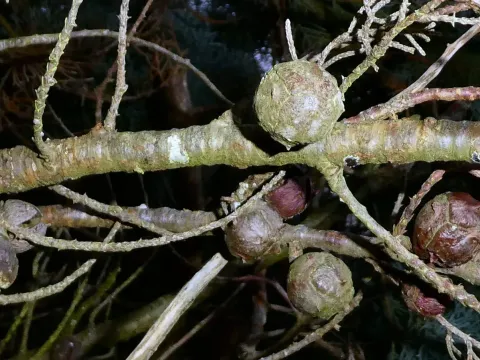
Cypress
Cupressus L.
Cypress (genus Cupressus L.) belongs to the family Cupressaceae, comprising various evergreen coniferous trees and shrubs. These plants are native to temperate and subtropical regions across the Northern Hemisphere, showing significant diversity in both wild and cultivated forms.
What the section contains
 Arizona cypress
Cupressus arizonica Greene
Arizona cypress
Cupressus arizonica Greene
 Atlas cypress
Cupressus sempervirens L. var. atlantica (Gaussen) Silba
Duprez cypress
Cupressus sempervirens L. var. dupreziana (A. Camus) Silba
Atlas cypress
Cupressus sempervirens L. var. atlantica (Gaussen) Silba
Duprez cypress
Cupressus sempervirens L. var. dupreziana (A. Camus) Silba
 Himalayan cypress
Cupressus torulosa D. Don
Italian cypress
Cupressus sempervirens L.
Himalayan cypress
Cupressus torulosa D. Don
Italian cypress
Cupressus sempervirens L.
 Mexican cypress
Cupressus lusitanica Mill.
Mexican cypress
Cupressus lusitanica Mill.
 Monterey cypress
Cupressus macrocarpa Hartw.
Monterey cypress
Cupressus macrocarpa Hartw.
 Nootka cypress
Cupressus nootkatensis D. Don
Nootka cypress
Cupressus nootkatensis D. Don
Cypress
The climate requirements for cypress focus on mild winters and warm, sunny summers. While some species show moderate cold hardiness, most varieties prefer Mediterranean-like climates with protection from harsh frost and desiccating winds, which can damage the delicate scale-like foliage.
Regarding soil preferences, cypress thrives in well-drained, fertile, slightly acidic to neutral soils. Drainage is the most critical factor, as stagnant water leads to rapid root decay. The root system is relatively extensive, requiring adequate space for proper development and nutrient uptake.
Agrotechnical practices involve regular moisture management during the early establishment phase and pruning to maintain shape or density. Fertilizer applications should be focused on the active growth period, typically in late spring, using balanced nitrogen-phosphorus-potassium formulations for conifers.
Economically, cypress is highly valued in horticulture for its ornamental beauty in public and private landscapes. Beyond aesthetics, the wood is renowned for its high resistance to moisture and pests, making it an excellent material for high-quality outdoor construction and fine furniture making.
The primary pests affecting cypress trees include spider mites and scale insects. These pests feed on the needles, causing yellowing and dieback of branches if not managed with timely horticultural oil or systemic insecticide applications.
Pathogenic threats include Seiridium canker and root rot, which are often encouraged by poor soil drainage and high humidity. Integrated pest management, proper spacing for airflow, and maintaining tree vigor are essential strategies to prevent major outbreaks.