
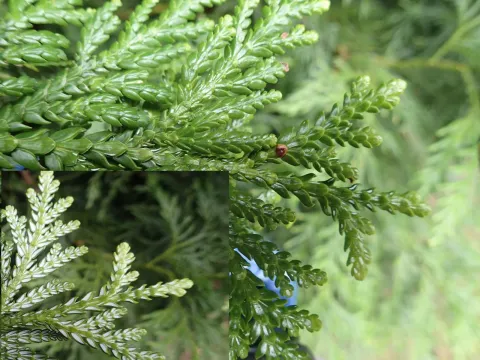
Hiba
Thujopsis
Thujopsis, commonly known as Hiba or the False Arborvitae, belongs to the Cypress family (Cupressaceae). Native to the forests of Japan, this evergreen conifer is highly valued for its dense, glossy foliage and elegant, broad pyramidal habit.
What the section contains
Hiba
The plant thrives in regions with high humidity and prefers fertile, well-drained soils with a slightly acidic pH. It requires consistent moisture levels in the substrate throughout the entire growing season.
Location is critical for the healthy growth of Hiba; it prefers semi-shaded areas protected from strong, drying winds and harsh winter sun, which can cause foliage desiccation. It is not fully drought-tolerant.
Cultural practices include deep watering during dry spells and the application of organic mulch around the base. Mulching helps retain soil moisture and protects the shallow root system from extreme temperature fluctuations.
Economically, Thujopsis is primarily grown for ornamental purposes in nurseries and public gardens. Its wood is also historically significant in Japan for construction, known for being rot-resistant and aromatic.
The most common health issues for Thujopsis are fungal pathogens, specifically those causing root rot or needle blight, usually induced by poor drainage or excessive soil waterlogging.
Preventative measures should focus on soil structure management. Ensuring a professional-grade drainage layer and monitoring the site for water stagnation is essential for long-term health.
Pest problems typically involve scale insects and spider mites. These pests tend to colonize the underside of the flat, scale-like needles, leading to chlorosis and needle drop if left unchecked.
Integrated pest management, including the use of horticultural oils or systemic insecticides, is recommended at the first sign of infestation to preserve the visual quality of the plant.
Regular maintenance, including the removal of dead or crossing branches, improves air circulation within the canopy, which effectively reduces the likelihood of fungal infections.