
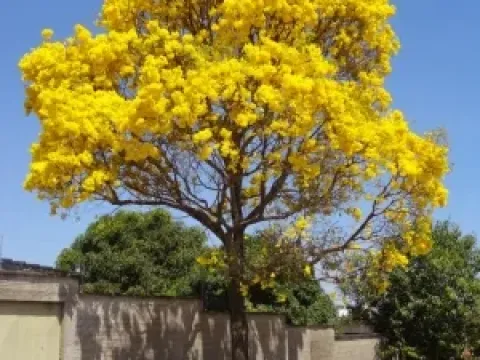
Yellow trumpet tree
Tecoma ochracea
The Yellow trumpet tree (Tecoma ochracea) is a member of the Bignoniaceae family, native to the tropical and subtropical landscapes of South America. It is widely recognized for its vibrant, golden-yellow flowers that appear in dense clusters during the bloom season.
What the section contains
Yellow trumpet tree
This culture thrives in full sun exposure. In regions with freezing winters, it is typically cultivated as a container plant, necessitating a move to a greenhouse or indoors to protect the root system from frost damage.
Soil requirements focus on fertility and drainage. The plant prefers a well-aerated, loamy substrate that allows water to pass through freely. A slightly acidic to neutral pH level is optimal for healthy foliage development and nutrient absorption.
Maintenance involves a consistent watering schedule during the spring and summer months. However, as an agricultural practice, it is crucial to allow the top layer of the soil to dry out between waterings to prevent the development of root-borne pathogens.
The plant serves an important role in urban forestry and landscape design. Its aesthetic appeal makes it a favored choice for planting in public squares, botanical gardens, and private estates in tropical and subtropical climates.
Common pests that affect Tecoma ochracea include scale insects and mealybugs. These sap-sucking pests can weaken the tree if left untreated, leading to chlorosis and potential leaf drop during the peak growing season.
Fungal issues, such as leaf spot, may appear when humidity levels are excessively high. Proper spacing between plants or containers is essential to ensure adequate airflow, which is a natural deterrent for most foliar pathogens.
Root rot is the most significant threat to the longevity of the tree. It is predominantly caused by overwatering or poor drainage systems in the pots, leading to oxygen deprivation in the root zone.
Integrated pest management strategies are recommended, utilizing both mechanical removal of pests and targeted systemic insecticide applications. Early intervention is key to preventing widespread infestations in a nursery or garden setting.
To keep the tree healthy, regular pruning is necessary. Removing dead or crossing branches promotes better light penetration and air circulation throughout the canopy, significantly reducing the risk of pest and disease outbreaks.