
Tecomaria
Tecomaria
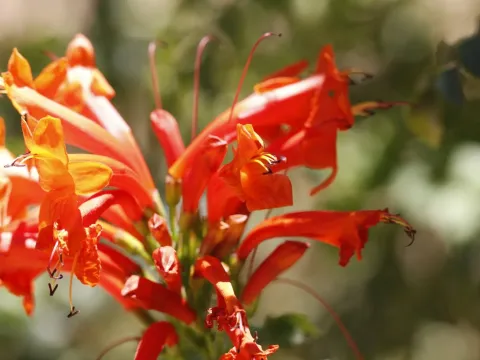
Tecomaria (Tecomaria capensis), a member of the Bignoniaceae family, is a robust evergreen shrub native to Southern Africa. It is widely recognized in horticultural circles for its dense foliage and vibrant, tubular, nectar-rich flowers that attract pollinators.
What the section contains
Tecomaria
In terms of climatic requirements, Tecomaria thrives in frost-free regions. While it is hardy in Mediterranean-like climates, in colder areas, it must be grown in containers and moved indoors during the winter months to avoid frost damage.
Soil requirements for this plant are relatively flexible, provided that the growing medium is well-draining. Loamy, slightly acidic to neutral soils enriched with organic matter support the fastest growth rates and the most prolific flowering.
Cultural practices include regular pruning, which is essential for maintaining the shape and size of the plant. Without consistent trimming, Tecomaria can become leggy and lose its aesthetic appeal, especially when used in formal landscaping or hedge formations.
Regarding sunlight, the plant prefers full sun to light shade. Direct sun exposure is crucial for the development of deep-colored blooms. In container gardening, placing the plant on a sunny patio or a south-facing balcony is ideal for optimal development.
Common pests that may affect Tecomaria include aphids, spider mites, and scale insects. These pests typically congregate on the undersides of leaves or along new, tender shoots, extracting plant sap and causing yellowing or stunted growth.
Integrated Pest Management (IPM) strategies, such as using horticultural oils or systemic insecticidal soap, are highly effective when applied at the early onset of an infestation, helping to maintain the health of the shrub.
Root rot, often caused by Phytophthora or Pythium species, poses a significant threat to Tecomaria grown in waterlogged conditions. Ensuring a porous soil structure and avoiding standing water in the root zone is the primary defense against these pathogens.
Powdery mildew may occur in poorly ventilated environments or during periods of high humidity. Increased spacing between plants and localized air movement can significantly reduce the incidence of fungal spores on the foliage.
Regular monitoring of plant health, especially during the transition of seasons, is critical. By maintaining optimal soil drainage and providing adequate nutrition, the plant's natural resilience against common diseases is greatly improved.