
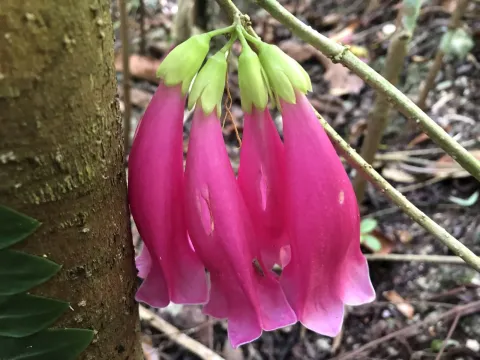
Tecomanthe
Tecomanthe
Tecomanthe is a genus of woody evergreen vines belonging to the Bignoniaceae family. These plants are native to the tropical regions of Australia, New Zealand, and the Pacific Islands, where they thrive in lush, humid environments.
What the section contains


Tecomanthe
To cultivate these plants successfully, it is essential to maintain warm temperatures year-round. They are highly sensitive to frost, making them suitable primarily for tropical or subtropical climates or controlled greenhouse environments.
The soil requirements focus on high organic matter content, excellent drainage, and slightly acidic to neutral pH levels. A well-draining substrate is vital, as the root systems of these tropical vines are prone to damage if subjected to waterlogging.
Consistent moisture levels are critical for the healthy development of foliage. Irrigation should be adjusted based on seasonal light intensity, ensuring the soil remains moist but never saturated during the peak growing season.
Strategic pruning and structural support are fundamental to the management of Tecomanthe. As these plants are vigorous climbers, sturdy trellises or arbors are necessary to train the vines and ensure proper sunlight exposure for blooming.
Common agricultural threats include infestations by spider mites and aphids, which typically settle on the undersides of leaves. These pests thrive in dry indoor conditions and can cause significant foliage chlorosis if not managed promptly.
Fungal pathogens such as root rot represent the most significant threat to the survival of the plant. Maintaining adequate spacing between specimens and ensuring proper ventilation are the most effective strategies for long-term health and disease prevention.