
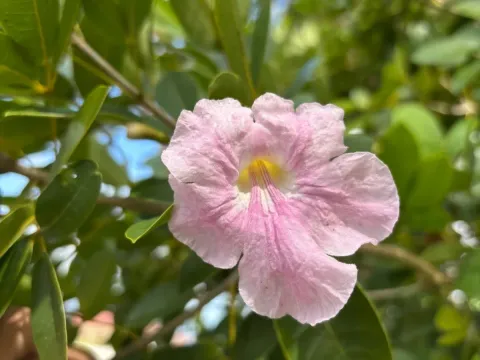
Tabebuia riparia
Tabebuia riparia
Propagation of Tabebuia riparia is primarily achieved through seeds, which maintain high viability if sown shortly after harvest. The seeds should be cleaned of any pulp and planted in a well-draining, sterile substrate to prevent damping-off diseases.
What the section contains
Tabebuia riparia
For optimal germination results, maintain a constant soil temperature between 25 and 28 degrees Celsius. Providing high humidity and light shading during the initial stage helps protect delicate sprouts from dehydration and excessive solar radiation.
Seedlings are typically ready for transplanting once they reach the two-leaf stage. Careful handling of the root system is essential, as the plant is susceptible to transplant shock; using peat pots can minimize disturbance during the moving process.
In nursery settings, misting systems are employed to maintain the required atmospheric humidity during the early growth phase. Consistent moisture levels in the growing medium are vital until the root system is well-established in its new container.
Vegetative propagation via semi-hardwood cuttings is also a viable technique for clonal production. Cuttings should be treated with root-promoting hormones and placed in a controlled, humid environment to ensure successful development of new adventitious roots.
Tabebuia riparia, a member of the Bignoniaceae family, is a tropical tree that thrives in warm, coastal environments. It requires a high-light environment to maintain its structural integrity and to produce the vibrant floral displays characteristic of the species.
The tree prefers fertile, sandy-loam soils with excellent drainage capabilities. While it enjoys a moist environment, it cannot tolerate waterlogged conditions, which lead to root asphyxiation and eventual plant death.
Regarding climate, this species is strictly tropical and does not tolerate freezing temperatures. It requires a year-round warm climate, with minimum temperatures ideally kept above 15 degrees Celsius to ensure continuous metabolic activity and health.
Watering frequency should be adjusted based on the season. During the active growing period, generous watering is required, while a moderate reduction in water during cooler or drier periods can help trigger better flowering cycles.
Nutrient management is critical for healthy foliage development. A balanced NPK fertilizer, supplemented with magnesium and iron, should be applied during the primary growth stages to prevent nutritional deficiencies.
Pest management is a routine part of maintaining Tabebuia riparia. Common threats include spider mites, mealybugs, and scale insects, which settle on the underside of leaves or on succulent stems to feed on plant sap.
Fungal diseases are predominantly related to environmental conditions, particularly poor air circulation and excessive substrate moisture. Leaf spot and root decay are the most common consequences of such neglect in greenhouses.
Integrated Pest Management (IPM) strategies are highly recommended. These involve regular physical monitoring, the introduction of beneficial predatory insects, and targeted applications of systemic insecticides when populations exceed economic thresholds.
Keeping the surrounding area clean of fallen debris is essential to reduce the inoculum pressure of soil-borne pathogens. Proper pruning helps improve light penetration and airflow, significantly decreasing the risk of fungal proliferation.
- Maintain appropriate spacing to promote air circulation.
- Perform regular sanitation of the greenhouse environment.
- Use systemic fungicides for controlling established fungal infections.