
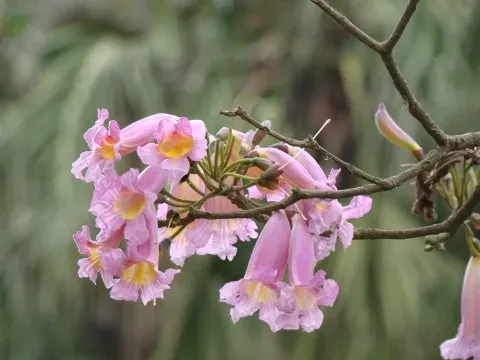
White Tecoma
Tecoma leucoxylon
White Tecoma (Tecoma leucoxylon) is a prominent species of the Bignoniaceae family, native to the Caribbean region, where it thrives in tropical and subtropical environmental conditions.
What the section contains
White Tecoma
The tree is well-adapted to warm climates and requires consistent exposure to full sunlight to facilitate healthy growth cycles and abundant flowering throughout the season.
Optimal cultivation involves planting in well-drained, nutrient-rich soils, as the species is highly sensitive to waterlogging which can quickly lead to root decay.
Although the plant shows moderate drought tolerance once fully established, young trees must receive regular irrigation to develop a robust and deep root system.
Beyond its landscape appeal, the tree is economically significant for its durable timber, often traded as 'poui' wood, which is prized for its high density and structural strength.
The most common biological threats to Tecoma leucoxylon involve soil-borne pathogens and fungal issues that target the root system in poorly drained or overly saturated substrates.
Pests such as leaf-eating insects and scale insects may infest the foliage, requiring active monitoring to prevent substantial defoliation and growth retardation in saplings.
Maintaining air circulation within the canopy is essential to prevent mold growth and fungal diseases that typically occur under high-humidity and low-airflow conditions.
Integrated pest management strategies should focus on preventing outbreaks through cultural practices, such as proper spacing and removal of affected plant debris.
Careful selection of the site and providing adequate protective measures during the early establishment phase significantly mitigate these risks for commercial or ornamental growers.