
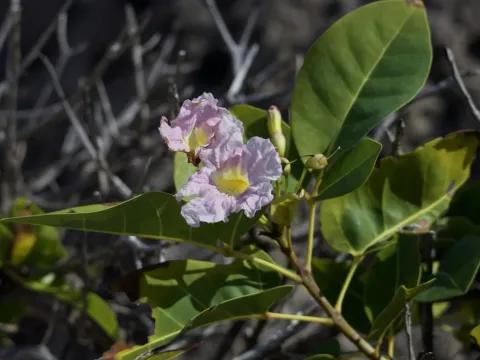
Tabebuia pallida
Tabebuia pallida
Tabebuia pallida, commonly known as the white cedar, belongs to the Bignoniaceae family. Originating from the Caribbean islands, this tree is well-adapted to tropical conditions and is frequently used as a prominent ornamental species in subtropical landscapes.
What the section contains
Tabebuia pallida
The culture thrives in areas with full sun exposure. It is crucial to select a planting location that receives at least six to eight hours of direct sunlight daily to encourage vigorous growth and the characteristic profuse flowering that the species is famous for.
Soil requirements are relatively specific: the plant demands well-draining soil to prevent root rot. While it can adapt to various soil types, it performs best in loamy, slightly acidic to neutral substrates that allow for proper root aeration and healthy nutrient absorption.
Regarding agrotechnical practices, regular maintenance includes pruning to shape the canopy and remove dead or crossed branches. Fertilizer applications should be balanced, focusing on promoting both vegetative growth and floral production without causing excessive, weak branch formation.
The primary economic and aesthetic utility of Tabebuia pallida lies in landscaping. It is widely planted in public parks, residential gardens, and along avenues because of its resilient nature and the beautiful display of white or light pink tubular flowers during the blooming season.
Fungal infections are among the most significant threats to Tabebuia pallida, often occurring when the tree is subjected to prolonged periods of high humidity and poor air circulation. Root rot remains the most serious condition to monitor.
Pest populations such as aphids, scale insects, and spider mites can frequently colonize the foliage. These pests feed on plant sap, leading to leaf discoloration, curling, and overall decline in the health of the tree if left unmanaged by the grower.
Management strategies involve keeping the tree healthy through proper irrigation and fertilization, which builds natural resilience. In cases of significant infestation, targeted applications of horticultural oils or systemic insecticides may be necessary to restore balance.
Sanitation is key to pest and disease control. Growers should ensure that fallen leaves and debris around the base of the tree are regularly removed, as these materials can harbor fungal spores and overwintering larvae of harmful insects.
Regular visual inspections are recommended as a best practice. By identifying the initial signs of infestation or disease, one can apply localized treatments before the problem spreads across the entire tree, thereby preserving its long-term vitality.