
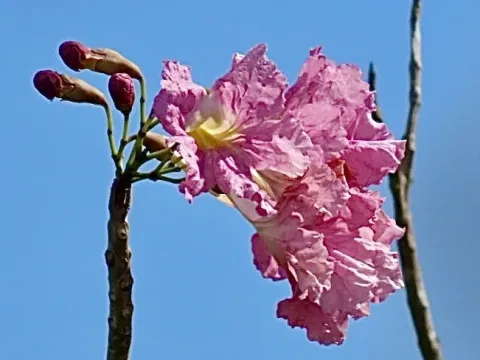
Tabebuia
Tabebuia
Propagation of Tabebuia is primarily achieved through seeds or cuttings. Seeds must be sown immediately after collection, as they have a short viability period and require fresh conditions to germinate effectively.
What the section contains


Tabebuia
The optimal sowing time aligns with the onset of the rainy season to provide consistent moisture. Pre-soaking seeds in growth-promoting solutions can significantly improve the uniformity and speed of germination.
Cuttings are used for vegetative propagation, particularly when cloning specific superior cultivars. Semi-hardwood stems are selected and treated with rooting hormones before being placed in a high-humidity environment.
Seedlings should be transplanted into individual containers once they develop their first set of true leaves. It is vital to maintain the integrity of the taproot to ensure the long-term health and stability of the future tree.
Outplanting in the field is scheduled once the saplings reach a height of at least 50–70 cm. This ensures they are robust enough to withstand fluctuating environmental conditions in their permanent location.
Tabebuia, a member of the Bignoniaceae family, is a genus of tropical trees native to the Americas. These trees are highly valued for their massive, colorful blooms and exceptionally dense, durable wood.
The climate requirements are strictly tropical or subtropical, as the trees are sensitive to frost. They thrive in temperatures ranging between 20°C and 30°C and require stable, warm weather to maintain active growth.
Well-drained, fertile soil is a non-negotiable requirement for Tabebuia. The trees are highly susceptible to root rot if the soil remains waterlogged, making proper soil drainage a key factor in site selection.
Exposure to full sunlight is essential for the tree's development and successful flowering. Insufficient light leads to weak, spindly growth and a significant reduction in the number of flowers produced.
Regular irrigation is needed during the active growth period. However, managing water is crucial during the dormancy period to prevent soil saturation and promote a healthy cycle of growth and rest.
Tabebuia is commercially prized for its wood, commonly referred to as "ipe" or "Brazilian walnut." It is renowned for its incredible hardness, resistance to rot, and density, making it ideal for high-end outdoor construction.
In landscaping, the yield is measured by the ornamental output of the tree during its flowering season. The trees produce spectacular masses of tubular flowers that provide significant value to urban greening projects.
The productivity of a plantation depends on tree density and management practices. Implementing sustainable forestry techniques allows for consistent biomass production while maintaining the ecological balance of the plantation.
Some species of Tabebuia are also utilized in traditional and modern medicine, where the bark is harvested for specific bioactive compounds. This requires sustainable harvesting practices to ensure the tree's survival.
The overall market value is determined by the specific species grown and the quality of the timber, which is influenced by the climatic conditions and soil fertility of the cultivation site.
Fungal pathogens represent the most significant threat to Tabebuia, often triggered by excessive soil moisture and poor drainage. Preventive measures include proper irrigation scheduling and field sanitation.
Insect pests, such as aphids, scale insects, and spider mites, frequently target young foliage and stems. Integrated pest management strategies, including the use of targeted insecticides, are recommended to control infestations.
Chlorosis, usually caused by micronutrient deficiencies like iron or magnesium, is a frequent physiological disorder. This can be effectively corrected through the application of chelated fertilizer blends.
Damage to the root system during maintenance activities can create entry points for secondary infections. Therefore, all pruning and soil work must be performed with clean, sanitized tools to minimize risk.
Environmental stressors such as hurricane-force winds can cause mechanical damage. Selecting resistant varieties and maintaining a proper pruning cycle helps strengthen the tree’s overall resilience against extreme weather.