
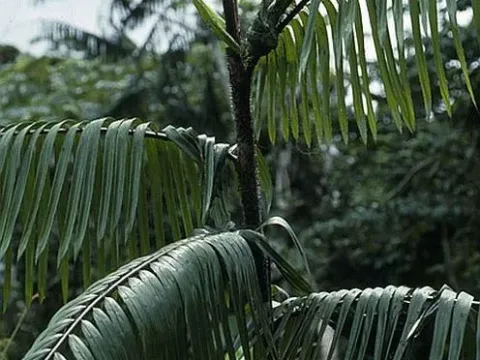
Oncocalamus
Oncocalamus
Oncocalamus is a fascinating genus of climbing palms belonging to the Arecaceae family. Native to the humid rainforests of West and Central Africa, these plants are uniquely adapted to life under a dense forest canopy.
What the section contains

Oncocalamus
The cultivation of Oncocalamus demands a strictly tropical climate. The plant requires consistently warm temperatures throughout the year, with a preference for high relative humidity levels, similar to its indigenous rainforest environment.
Soil requirements focus on high organic matter content and excellent drainage. The plant thrives in fertile, loamy soils that can retain moisture while preventing waterlogging, which is detrimental to its root system.
Botanically, Oncocalamus is categorized as a climbing palm that utilizes modified leaves, known as cirri, to anchor itself to surrounding vegetation. This climbing habit allows the plant to efficiently reach light in the competitive forest understory.
The economic value of this genus lies primarily in the utility of its tough, flexible stems. These fibers are traditionally used in artisanal crafting, basketry, and the manufacturing of lightweight furniture, similar to Asian rattan species.
The primary threats to Oncocalamus in its natural habitat are fungal pathogens that thrive in excessively wet conditions. These pathogens can cause stem rot and leaf blight, particularly in dense, poorly ventilated areas.
Insect pests, such as aphids and various species of mites, pose a risk by feeding on the sap of young, tender leaves. These infestations can cause stunted growth and weaken the plant's structural integrity.
Loss of habitat due to deforestation represents the most significant threat to the survival of various Oncocalamus species. The destruction of the forest canopy directly impacts the plant's ability to climb and complete its life cycle.
In managed or nursery settings, root rot caused by stagnant water remains the most critical health issue. Ensuring proper aeration of the root zone is vital for maintaining healthy specimens.
Weed competition is also a concern for younger plants, as they struggle to compete for nutrients and space during their initial growth phase. Manual weeding and proper spacing are recommended practices for optimal development.