
Oncocalamus mannii
Oncocalamus mannii
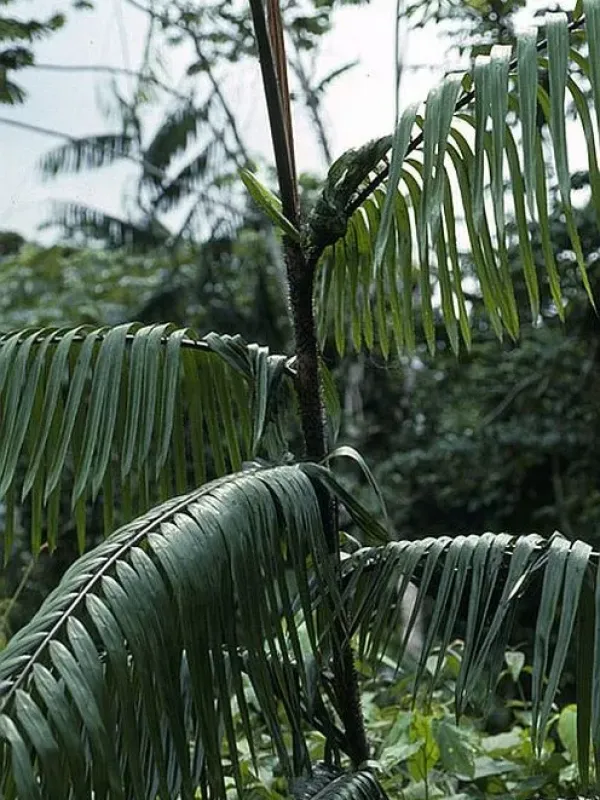
Description
Growing requirements
Oncocalamus mannii is a species of climbing palm belonging to the Arecaceae family. Native to the tropical rainforests of Central and West Africa, this plant is recognized as one of the significant sources of rattan in the African region.
The cultivation of Oncocalamus mannii requires high humidity levels and consistent tropical temperatures. As a climbing plant, it thrives in secondary forests where the canopy provides the necessary shade and vertical support for its long, flexible stems.
Soil requirements for this palm include deep, nutrient-rich substrates with high organic content. While the plant can tolerate moist conditions, it is essential that the soil is well-drained to prevent root decay, which is common in stagnant water environments.
Agronomic management of this species is largely based on sustainable harvesting practices rather than traditional intensive farming. Maintaining the forest structure is critical for the long-term health and growth of the palm clusters.
The stems of Oncocalamus mannii are highly valued for their strength and flexibility. They are widely utilized in the manufacturing of furniture, baskets, and handicraft items, contributing significantly to the local economy of forest-dwelling communities.
Main diseases and pests
Major threats to Oncocalamus mannii include overharvesting and habitat loss due to deforestation. As the plant depends on host trees for growth, the clearing of forest areas directly impacts its ability to establish and produce high-quality stems.
Pest problems are primarily associated with wood-boring insects that attack the stems. These pests can significantly reduce the commercial value of the harvested material if proper storage and processing techniques are not strictly followed.
Fungal diseases are a persistent risk, especially in the humid conditions where the plant grows. Rotting of stems can occur if harvested material is not quickly dried or if the harvested areas are not kept clear of organic debris that encourages spore growth.
Human activities, including land conversion for agriculture, lead to habitat fragmentation. This reduces the density of wild populations, making it increasingly difficult for the species to propagate naturally within its historical range.
Implementing sustainable management practices, such as rotational harvesting and enrichment planting, is essential for preserving the species. Such measures help mitigate the risks of population collapse and ensure a steady supply of non-timber forest products.