
Protea grandiceps
Protea grandiceps
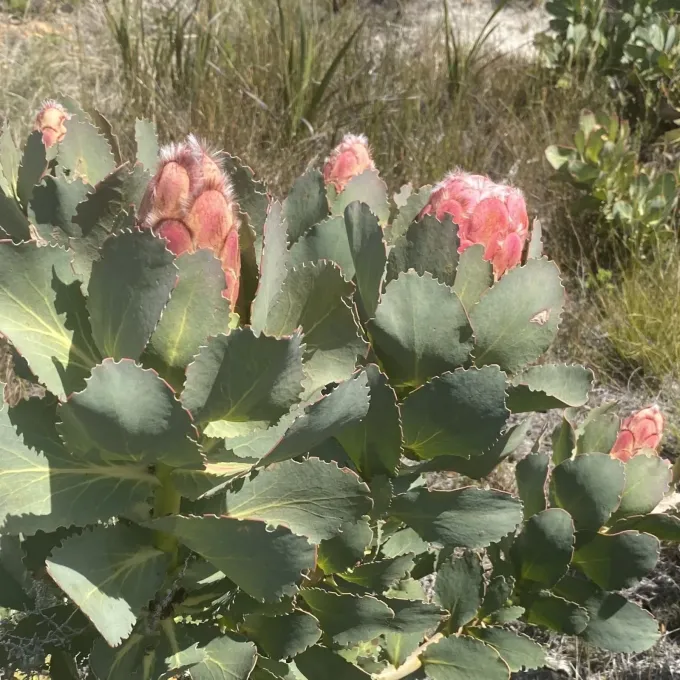
Description
Sowing dates
Protea grandiceps, a member of the Proteaceae family, is typically propagated either by seeds or through vegetative cuttings to ensure consistency in commercial crops.
Seed sowing requires a well-drained, acidic sandy substrate that is exceptionally low in phosphorus, as high nutrient levels can be lethal to young seedlings.
In many cases, smoke treatment or the use of smoke-water is necessary to break seed dormancy, mimicking the natural fire cycle of the South African fynbos.
Cuttings are preferred for commercial production to maintain the desirable genetic traits of high-quality mother plants, ensuring uniform growth and bloom characteristics.
Propagation must be performed in a sterile environment to prevent the introduction of soil-borne pathogens that can devastate young plantlets during their root development.
Growing requirements
Native to the South African fynbos, this species thrives in a Mediterranean climate characterized by cool, wet winters and warm, dry summers.
The soil must have excellent drainage and a low pH, as the plant is adapted to nutrient-poor, rocky environments where drainage is never compromised.
High light intensity is a mandatory requirement for the development of healthy, vibrant flower heads, making greenhouse supplemental lighting essential in low-sunlight regions.
Temperature management should maintain a range of 15°C to 25°C, with strict avoidance of frost, which causes irreparable damage to the vascular tissue.
Watering requires precision; over-saturation of the substrate is the most common cause of crop failure, as it promotes root-rotting fungi.
Yield
Protea grandiceps is cultivated primarily for the high-end cut flower market, valued for its striking, durable blooms that are ideal for complex floral arrangements.
Annual yields are determined by plant maturity and the intensity of the cultivation system, with mature bushes providing a sustainable crop of long-lasting stems.
Strategic pruning post-harvest is vital to stimulate new vegetative growth for the following season, directly impacting the overall yield potential of the plantation.
The commercial lifespan of a protea farm is long-term, often reaching a decade or more, provided that soil structure and hygiene protocols are maintained.
The economic value of this crop is supported by its superior shelf life and resilience during cold chain transportation, making it a viable export product.
Main diseases and pests
Root rot caused by Phytophthora species remains the most significant threat, often exacerbated by poor drainage or excessive soil moisture levels.
Insects such as mealybugs and spider mites frequently infest greenhouses, necessitating integrated pest management strategies to keep populations below economic injury levels.
Fungal leaf spots can occur when humidity levels are high and air circulation is poor, which is a common occurrence in dense greenhouse plantings.
Chemical control measures are limited by the sensitivity of Proteaceae to various pesticides, requiring growers to prioritize biological and mechanical control.
Strict quarantine measures are essential to keep the crop free from soil-borne pathogens and invasive pests that could jeopardize the entire production area.
Harvesting
Harvesting is performed manually to ensure that only blooms at the optimal stage of development are selected, maximizing the post-harvest vase life of the flowers.
Immediate hydration in a clean, pH-balanced solution is critical to prevent air embolisms in the stems and to support long-term transportability.
The grading process involves assessing the diameter of the flower head and the length of the stem to meet stringent export quality standards.
Flower heads are carefully packed to protect the delicate bracts from mechanical damage while ensuring adequate airflow to prevent fungal growth during transit.
Cold chain management at every stage of the distribution process is essential to maintain the quality and aesthetic appeal of the protea upon arrival at the market.