
Protea cordata
Protea cordata
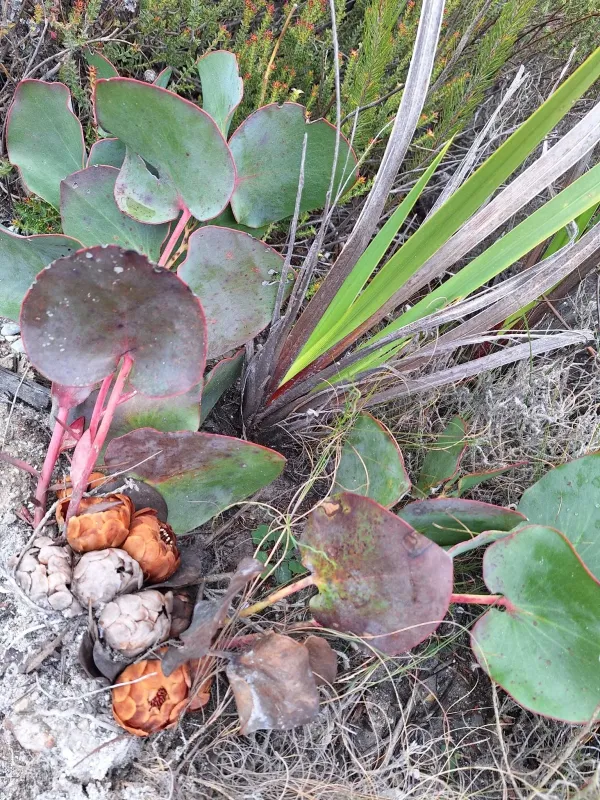
Description
Sowing dates
Propagation of Protea cordata in agricultural settings is predominantly achieved through seeds, as vegetative propagation via cuttings often results in poor success rates.
Sowing is typically performed during late summer or early autumn, effectively mimicking the natural germination cycle of the South African fynbos environment.
Seeds often require specific treatment, such as smoke-water priming or scarification, to break dormancy and trigger the biological pathways necessary for germination.
For optimal seedling development, a thermal regime involving significant diurnal temperature shifts between 10°C at night and 25°C during the day is highly recommended.
Care must be taken to use a nutrient-poor, sandy substrate during the initial stages to prevent the development of damping-off pathogens in the seedbeds.
Growing requirements
Belonging to the Proteaceae family, this species requires highly specific conditions, particularly well-drained, acidic soils with very low phosphorus levels.
Light intensity is a critical factor for successful growth; the plants demand full sun exposure to maintain their structural integrity and vibrant floral coloration.
Water management is essential: the root system is sensitive to waterlogging, necessitating excellent drainage and a controlled irrigation schedule in greenhouse environments.
It is vital to avoid standard commercial fertilizers, as Protea species have evolved to thrive in low-nutrient environments and can be toxic to phosphorus-rich regimes.
Adequate air circulation is necessary to reduce humidity levels around the foliage, which helps prevent the development of leaf spotting and fungal diseases.
Yield
Protea cordata is primarily cultivated as a high-value niche crop for the international floriculture industry, prized for its unique, heart-shaped floral aesthetics.
Yield is categorized by the number of marketable, high-quality flower heads produced per shrub, requiring a planned multi-year cropping cycle.
The time from initial planting to the first commercial harvest is typically several years, which requires careful financial and horticultural planning by producers.
Consistent yields are achieved through meticulous pruning practices after each harvest, which encourage the development of vigorous new lateral flowering stems.
Success in this market depends on meeting stringent quality standards, including stem thickness, foliage health, and the precise timing of floral maturity.
Main diseases and pests
Fungal pathogens such as Phytophthora are the most significant threats to production, often exacerbated by poor soil aeration or excess moisture in the root zone.
Common pests include spider mites and mealybugs, which tend to proliferate in greenhouse environments where airflow is insufficient or humidity is improperly managed.
Regular monitoring of plant health is necessary, as stress from environmental fluctuations can make plants more susceptible to opportunistic infections.
Chemical control must be applied with caution, as Proteaceae species are frequently sensitive to certain active ingredients found in common agricultural pesticides.
- Strict irrigation schedule management.
- Quarantine protocols for new plants.
- Sanitary removal of infected vegetation.
- Frequent ventilation to minimize condensation.
Harvesting
Harvesting is performed when the flower heads reach the optimal stage of development, usually defined by the opening of the inner bracts to showcase the center.
Stems should be cut with sanitized, sharp shears and immediately placed in clean water to prevent vascular embolisms that could compromise post-harvest longevity.
Post-harvest handling includes grading the stems by length and appearance, which is crucial for maximizing value in high-end international flower markets.
Storage at low temperatures is required to extend the vase life of the flowers, ensuring they remain fresh during transport and distribution to end retailers.
Careful packaging is necessary to protect the unique and somewhat delicate structure of the inflorescences during transit from the farm to the customer.