
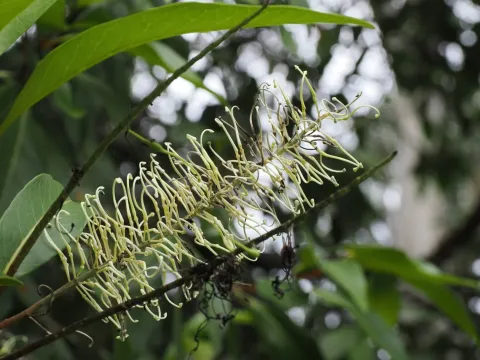
Buckinghamia
Buckinghamia
Buckinghamia is a small genus of evergreen trees belonging to the Proteaceae family. Native to the rainforests of Queensland, Australia, these plants are highly regarded in landscaping for their lush foliage and spectacular, elongated flower spikes.
What the section contains

Buckinghamia
The cultivation of this plant requires well-drained, slightly acidic soil. Proper drainage is the single most critical factor, as these plants are highly susceptible to root damage if left in waterlogged conditions for extended periods.
As a tropical species, Buckinghamia demands a warm climate with protection from frost. It thrives in locations that receive plenty of bright, indirect sunlight, which promotes healthy growth and abundant flowering during the season.
Regarding soil fertility, these plants are adapted to low-nutrient environments. When applying fertilizers, it is essential to avoid phosphorus-heavy formulations, as Proteaceae species have specialized roots that can be harmed by excess phosphorus.
Maintenance includes regular but careful watering. During dry spells, young trees require supplemental moisture, while established specimens are moderately drought-tolerant. Mulching around the base helps stabilize soil temperature and retain moisture.
The primary threat to Buckinghamia is Phytophthora root rot, a fungal pathogen that thrives in wet, poorly aerated soils. Preventing water accumulation at the base of the plant is the most effective preventative measure.
Pests such as scale insects and mealybugs can occasionally infest the foliage, particularly in sheltered or poorly ventilated areas. Regular monitoring of the underside of leaves and stems allows for early intervention before infestations become severe.
Nutrient deficiencies, particularly iron or magnesium, can result in leaf chlorosis. This condition is often tied to an incorrect soil pH, which prevents the plant from absorbing the necessary minerals from the substrate.
Mechanical damage caused by improper pruning can open entry points for pests and pathogens. Always ensure pruning tools are sharp and sanitized to avoid damaging the integrity of the tree's bark and vascular system.
Environmental stress, such as extreme temperature fluctuations or high humidity combined with poor airflow, may leave the tree vulnerable to secondary infections. Maintaining a clean and aerated growing space is essential for long-term health.