
Coast Banksia
Banksia littoralis
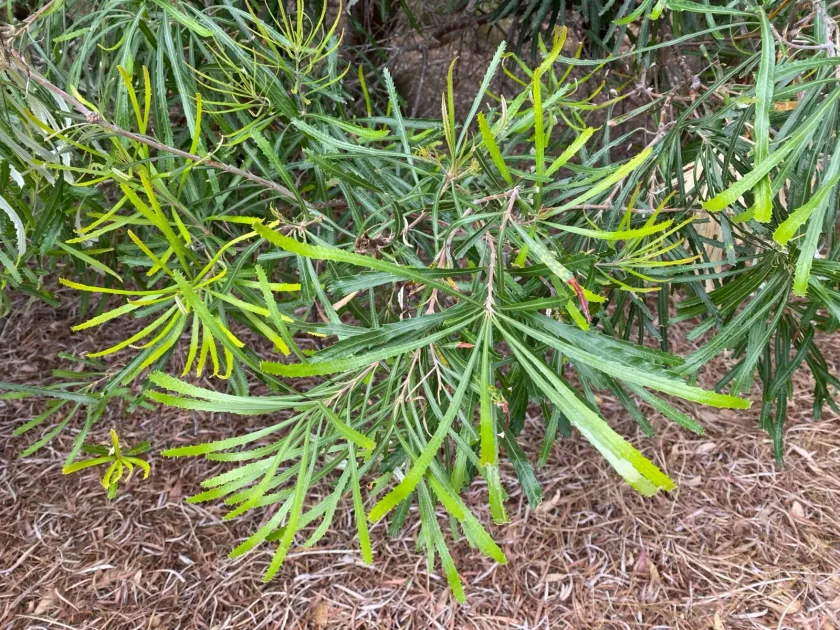
Description
Growing requirements
Coast Banksia (Banksia littoralis) is a prominent member of the Proteaceae family, native to the coastal regions of Western Australia. It is a hardy evergreen species often recognized by its distinct candle-like flower spikes.
The plant thrives in well-drained, sandy soils. While it is adapted to swampy coastal conditions in its wild habitat, in a managed landscape, it requires consistent moisture without waterlogging to prevent root suffocation.
Full sun exposure is crucial for the optimal development of this species. Insufficient light levels often result in sparse foliage and a complete failure to produce its characteristic floral displays.
Regarding soil fertility, it is essential to avoid fertilizers with high phosphorus levels. This species, like many Proteaceae, has evolved specialized proteoid roots that are highly efficient at absorbing nutrients in low-phosphorus soils.
The ideal climate is Mediterranean-like, characterized by mild, wet winters and warm, dry summers. Protection from heavy frosts is recommended, as extreme cold can cause significant damage to the plant's vascular tissue.
Main diseases and pests
The most devastating threat to Coast Banksia is the soil-borne pathogen Phytophthora cinnamomi. Once established, this fungus causes root rot that is virtually impossible to eradicate in affected plantations.
Wood-boring larvae pose a significant risk to the plant's health. These pests tunnel into the trunk and branches, compromising the structural integrity of the tree and creating entry points for fungal infections.
Scale insects and aphids frequently congregate on new shoots. Their feeding activity produces honeydew, which serves as a substrate for sooty mold, reducing the plant's ability to photosynthesize effectively.
Leaf spot diseases, caused by various fungal pathogens during prolonged wet periods, can cause premature leaf drop and weaken the plant, making it more susceptible to environmental stress.
Nutrient imbalance, particularly iron or magnesium deficiency induced by improper soil pH, often manifests as interveinal chlorosis, which stunts growth and reduces the overall vigor of the Banksia specimen.