
Buckinghamia celsissima
Buckinghamia celsissima
Description
Growing requirements
Buckinghamia celsissima, commonly known as the ivory curl tree, belongs to the Proteaceae family. It is a large evergreen tree native to the rainforests of Queensland, Australia.
The plant thrives in tropical and subtropical climates, requiring protection from frost. It is best adapted to regions where temperatures remain consistently warm throughout the year.
Cultivation requires deep, fertile, and well-drained soils. Because the root system is sensitive to waterlogging, selecting a site with good drainage is essential for long-term survival.
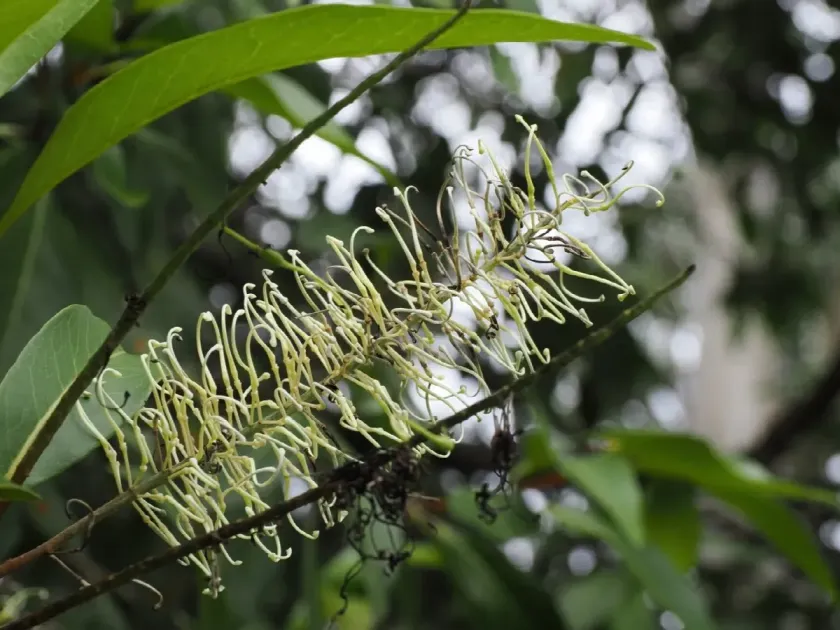
The species prefers full sun exposure to maintain its dense foliage and produce its characteristic white, fragrant, honey-scented floral spikes during the peak flowering season.
The ivory curl tree is highly valued as an ornamental specimen in landscaping. Its nectar-rich flowers are an important food source for native honeyeaters and other pollinators.
Main diseases and pests
Root rot is the most significant health threat for this species, often triggered by poorly drained soil or excessive moisture accumulation around the base.
The tree may occasionally be affected by various leaf-eating caterpillars that can damage the aesthetics of the canopy if not managed during the growth phase.
Scale insects and mealybugs can infest the branches and leaves, particularly in sheltered or poorly ventilated environments where moisture levels are high.
Fungal leaf spot diseases can occur under conditions of poor airflow and persistent humidity, necessitating improved canopy management to reduce foliage wetness.
Effective management includes maintaining appropriate soil hydration, ensuring adequate spacing between trees, and applying integrated pest control methods when necessary.