
Bull banksia
Banksia grandis
Description
Growing requirements
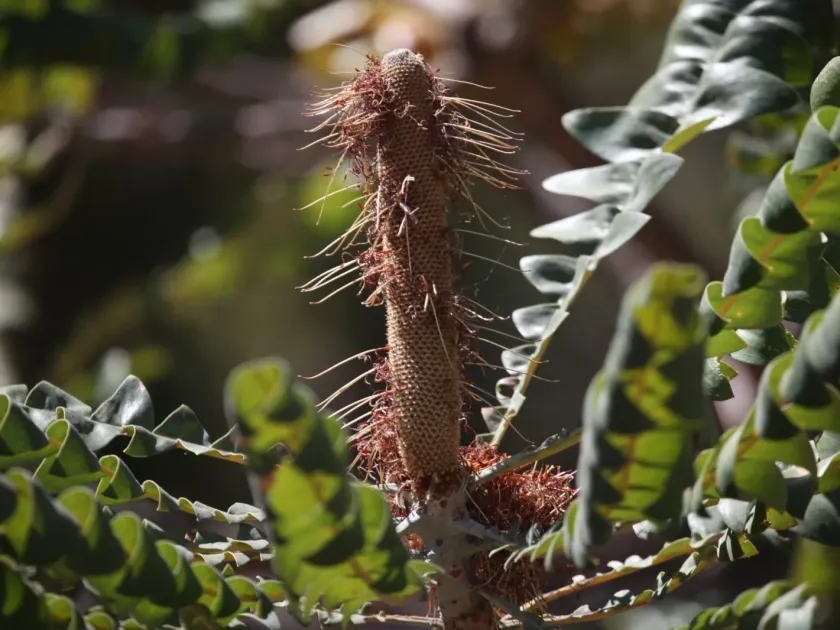
Bull banksia (Banksia grandis) is a prominent member of the Proteaceae family, native to the southwestern region of Western Australia. It is widely recognized for its impressive, large, bright yellow inflorescences and massive serrated leaves.
This species naturally inhabits diverse environments, ranging from sandy plains to jarrah forests. It has evolved to thrive in soils that are naturally low in nutrients, particularly phosphorus, which is a limiting factor for its growth in native settings.
Cultivation requires exceptionally well-draining soil, as the root system is highly prone to rot in waterlogged conditions. Sandy soils or rocky, well-aerated substrates provide the best environment for root development and stability.
The plant demands full sun exposure to flourish and produce its iconic flowers. It is adapted to a Mediterranean climate, requiring a distinct period of dry, warm weather to complete its annual growth cycle successfully.
In terms of agricultural management, irrigation should be strictly controlled, especially during the warmer months, to prevent excess moisture. Fertilizers must be carefully selected; use only low-phosphorus formulations specifically designed for native proteaceous species.
Main diseases and pests
The most critical threat is the water mold Phytophthora cinnamomi, which causes root rot and sudden death. Keeping the root zone dry and avoiding contaminated soil transport is crucial for disease prevention.
Insects such as wood-boring beetles can cause mechanical damage to the trunk and branches, potentially compromising the structural integrity of the plant over time.
Fungal leaf spot diseases may appear during periods of high humidity or poor ventilation, necessitating improved air circulation around the canopy of the plant.
Certain species of nectar-feeding insects and birds may interact with the flowers, and while birds are pollinators, some insects can cause damage to the developing seed follicles.
To maintain a healthy crop, growers should implement a strict quarantine protocol for new plants and maintain a clean environment, free from water stagnant zones.