
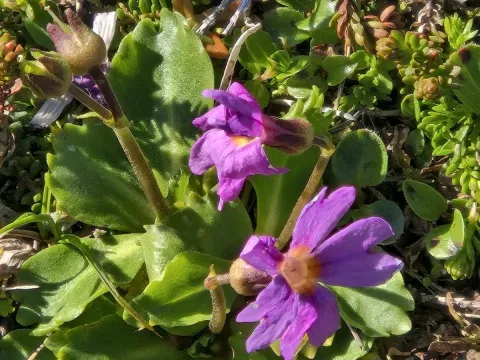
Wedge-leaf primrose
Primula cuneifolia
The wedge-leaf primrose (Primula cuneifolia) belongs to the Primulaceae family. This perennial herbaceous plant is native to the arctic and subalpine regions of the Russian Far East, Japan, and Alaska, where it thrives in rugged mountain environments.
What the section contains
Wedge-leaf primrose
The species is highly valued for its extreme hardiness and ability to survive in harsh northern climates. In horticultural settings, it is primarily used in rock gardens and alpine houses where cool, humid conditions can be maintained consistently throughout the season.
Successful cultivation requires soil that is gritty, free-draining, and rich in organic matter. The plant performs best in a slightly acidic to neutral substrate that mimics the mineral-rich soils found in its native mountain habitats.
Light requirements are specific: the plant prefers a sheltered position with bright but indirect light or light morning sun. It struggles to adapt to hot, arid conditions, making consistent soil moisture and atmospheric humidity critical factors for success.
Botanically, it is distinguished by a basal rosette of cuneate leaves with serrated margins. During the flowering period, it produces attractive, compact clusters of vivid pink to purple blooms, often featuring a distinct yellow throat that enhances its ornamental value.
Root rot and crown rot represent the most significant threats to Primula cuneifolia, particularly when the soil remains waterlogged. Ensuring excellent drainage and avoiding stagnant moisture around the base of the plant are essential preventative measures.
Slugs and snails are the primary pests that damage the succulent leaves of the primrose. Using protective barriers or organic pest control methods can mitigate the impact, especially during the moist spring and early summer periods when mollusks are most active.
Spider mites may become a problem during periods of low humidity or excessive warmth, leading to leaf discoloration. Maintaining healthy air circulation and ensuring the plant does not experience prolonged heat stress are key strategies to prevent mite infestations.
Aphids can sometimes congregate on developing buds, causing them to deform or fail to open. Careful monitoring and the use of targeted treatments are recommended if an infestation is detected, ensuring the chemical application is safe for perennial plants.
Maintaining proper hygiene by removing dead or decaying foliage helps to prevent the spread of fungal pathogens. Providing adequate space between individual plants encourages airflow, significantly reducing the pressure from typical garden diseases.