
Tufted loosestrife
Lysimachia thyrsiflora
Description
Growing requirements
Tufted loosestrife (Lysimachia thyrsiflora) is a hardy perennial belonging to the Primulaceae family. It is distinctively adapted to moist soils and wetland habitats, making it a unique botanical specimen.
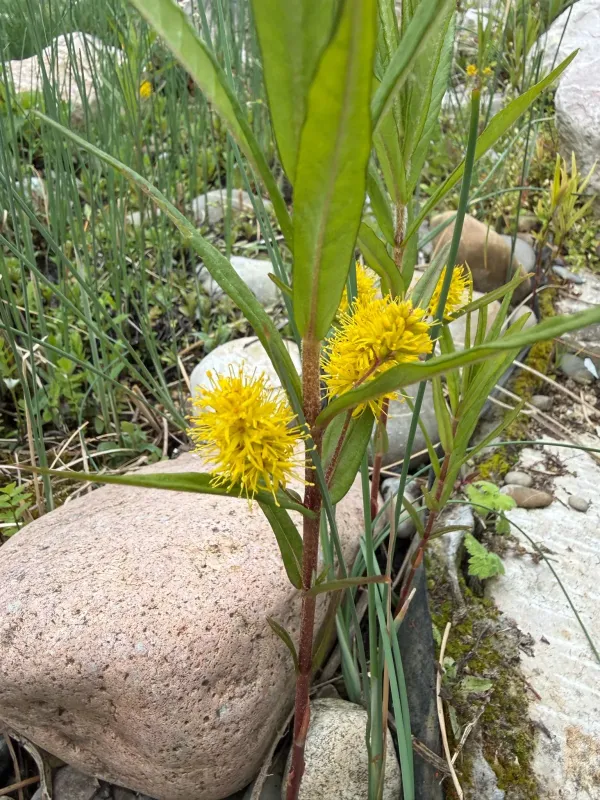
The plant features an erect stem reaching 60 cm in height, adorned with unique axillary yellow racemes. Its creeping rhizomes allow it to spread efficiently, forming dense colonies in suitable environmental conditions.
Cultivation requirements are centered around high moisture availability. It thrives in boggy or waterlogged soils, making it an excellent candidate for pond margins and aquatic environment restoration projects.
This species is highly climate-resilient, exhibiting significant cold tolerance during winter months. It prefers full sun or partial shade and remains productive in a wide range of temperate climatic zones.
In terms of usage, the plant is primarily valued for its ecological role in stabilizing soil in wet areas and its aesthetic contribution to water gardening. It serves as a beneficial plant for local biodiversity and pollinators.
Main diseases and pests
Tufted loosestrife is naturally robust and rarely susceptible to severe plant diseases. It maintains high immunity due to its native adaptation to damp and challenging wetland environments.
Minor occurrences of fungal leaf spots may appear under conditions of extreme stagnation, but these rarely impact the overall health or expansion of the plant colony significantly.
Pests are generally not a concern for this plant. Occasionally, common garden insects may feed on the foliage, but the plant's aggressive growth habit typically allows it to outpace minimal damage.
Management of potential threats relies on maintaining a balanced aquatic environment. Avoiding excessive use of chemicals is crucial to protect the delicate balance of the surrounding water habitat.
Good cultural practices, such as preventing overcrowding and ensuring clean water flow, remain the most effective methods for keeping the plant population healthy and free of disease.