
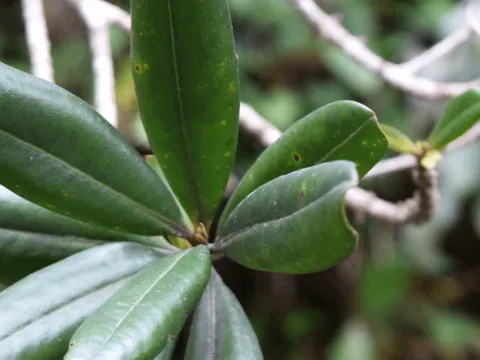
Myrsine robusta
Myrsine robusta
Myrsine robusta is a woody perennial shrub belonging to the Primulaceae family. It is native to subtropical regions where it thrives in humid environments, often occupying the understory layer of woody vegetation.
What the section contains
Myrsine robusta
The cultivation of this species requires well-draining, nutrient-rich soil with a slightly acidic to neutral pH. Proper soil structure is essential for root health, as stagnant water is detrimental to the plant's vascular system.
Climatic requirements are focused on maintaining a warm, stable environment without frost exposure. In regions with harsh winters, Myrsine robusta must be cultivated in climate-controlled greenhouses or as a houseplant.
Light exposure should be moderate and diffused. While the plant can tolerate some morning sun, afternoon heat often causes leaf scorch, necessitating the use of shade cloth or strategic placement in indoor environments.
General maintenance includes consistent watering, ensuring the substrate dries slightly between sessions. Fertilization should be focused on NPK balances designed for foliage plants to support dense and healthy growth throughout the season.
The most common pests affecting Myrsine robusta include scale insects and mealybugs. These pests sequester in the junctions of branches and the undersides of leaves, requiring regular monitoring to manage effectively.
Fungal root rots are frequent complications arising from over-watering practices. Ensuring high-quality drainage material at the bottom of containers is a fundamental preventive measure.
Spider mites can proliferate if the plant is kept in dry, indoor air for extended periods. Regular misting and proper ventilation act as a deterrent to mite colonization.
Powdery mildew may manifest as a white film on leaves when air circulation is poor. Improving environmental airflow is the primary mechanical solution for this issue.
Nutrient deficiencies, such as iron chlorosis, can occur if the water quality is poor or if the soil pH shifts away from the optimal range. Regular testing and soil amendments help keep the foliage vibrant.