
Myrsine laetevirens
Myrsine laetevirens
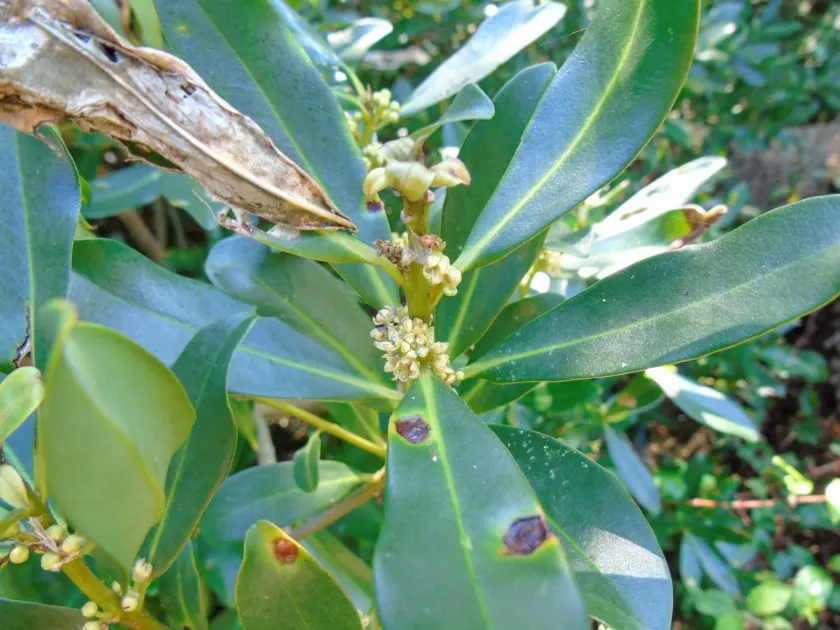
Description
Growing requirements
Myrsine laetevirens is a decorative evergreen shrub belonging to the Primulaceae family. It is highly valued for its dense, deep green foliage and its ability to thrive in various landscaped settings within its natural range.
The plant originates from South America, thriving in temperate and subtropical climates. It is typically found in forested areas where the soil is moist and enriched with organic matter, which defines its environmental needs.
For successful cultivation, it requires well-draining, fertile soil. The root system is sensitive to waterlogging, so it is essential to ensure that the site or container provides efficient drainage to prevent root issues.
Regarding light, Myrsine laetevirens prefers filtered sunlight or partial shade. Exposure to intense, direct afternoon sun can lead to leaf scorch and dehydration, particularly in regions with hot, dry summers.
Agrotechnical practices involve consistent moisture levels during the growing season and periodic fertilization to support dense growth. The plant also benefits from sheltered locations to protect it from harsh, drying winds.
Main diseases and pests
Common pests that affect Myrsine laetevirens include scale insects and mealybugs, which tend to gather on the undersides of leaves and along stems. These pests weaken the plant by feeding on its sap.
Fungal leaf spot diseases may develop if the plant is kept in conditions with poor airflow and high humidity. Proper spacing between plants and thinning out the canopy helps significantly in disease prevention.
Root rot is the most serious threat to the plant's health, typically occurring as a result of poor soil drainage or overwatering. Once established, this condition can be fatal, making prevention the best approach.
To manage pest infestations, growers should utilize horticultural oils or systemic insecticides applied at the first sign of activity. Regular pruning helps in removing infested material and keeping the plant vigorous.
Monitoring the foliage and root zone is critical for long-term survival. By maintaining a clean growing environment and providing appropriate nutrients, the grower can keep the shrub healthy and resistant to environmental stressors.