
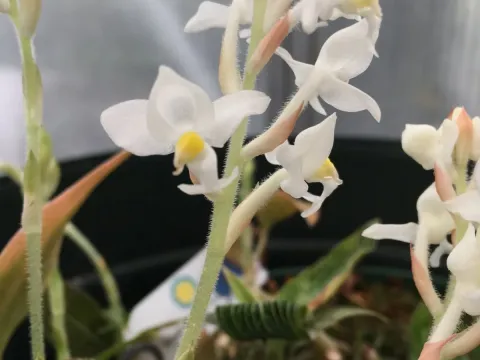
Ludisia
Ludisia A. Rich.
Ludisia (Ludisia A. Rich.) is a distinct genus of terrestrial herbaceous plants belonging to the Orchidaceae family. Often referred to as jewel orchids, these plants are primarily cultivated for their stunning, velvety foliage rather than their blooms.
What the section contains

Ludisia
The native range of this culture includes the tropical rain forests of Southeast Asia. In its natural habitat, Ludisia grows on the forest floor, thriving in high-humidity environments characterized by filtered light and nutrient-rich, decaying leaf litter.
Successful cultivation requires a stable climate with temperatures typically ranging between 20 and 25 degrees Celsius. The plant is sensitive to cold drafts and significant temperature fluctuations, which can trigger physiological stress and leaf loss.
The substrate must be exceptionally well-draining, loose, and aerated to prevent root asphyxiation. An ideal growing medium includes chopped sphagnum moss, orchid bark, perlite, and a small portion of charcoal to maintain a healthy microbial balance.
Agronomic management involves maintaining consistent moisture levels. Overwatering is a frequent mistake; the substrate should be kept damp but never waterlogged. High ambient humidity is essential for robust growth, often requiring misting or specialized equipment.
Major pests affecting this culture include spider mites and scale insects. These organisms thrive in environments with poor air circulation and low humidity, often colonizing the undersides of the leaves.
Root and stem rots represent the most severe pathological threats to Ludisia. These are almost exclusively caused by fungal pathogens that proliferate in dense, waterlogged, or overly compact soil mediums.
Effective pest management relies on early detection. Regularly inspecting the plants for webbing or sticky residue allows for the targeted application of horticultural oils or systemic insecticides before infestations become critical.
Bacterial soft rot can occur if water is trapped in the leaf axils for extended periods. Ensuring proper ventilation around the base of the plant helps mitigate this risk significantly.
Maintaining a clean cultivation area and sterilizing tools used for pruning or division are essential practices to prevent the transmission of pathogens between plants in the production cycle.