
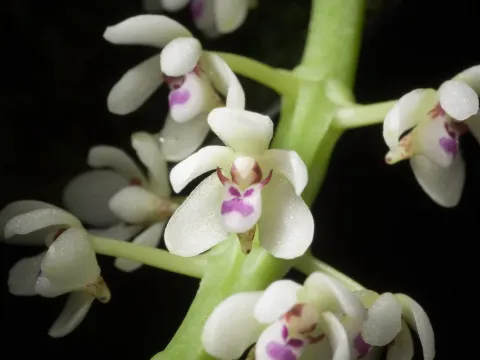
Macradenia
Macradenia
Macradenia is a genus of epiphytic plants within the Orchidaceae family. These orchids are native to the tropical forests of Central and South America, where they grow as epiphytes on tree branches in humid environments.
What the section contains


Macradenia
The genus is botanically distinguished by its clusters of small pseudobulbs that produce leathery leaves. The flowers are characterized by a unique structure, often featuring a long lip appendage, which is the primary trait leading to the name derived from Greek roots for "long gland."
To cultivate Macradenia successfully, a grower must mimic its native tropical environment. This requires high ambient humidity, ideally maintained between 70% and 80%, to support healthy metabolic processes and leaf development.
The potting substrate must be extremely well-draining, typically consisting of medium-grade pine bark, charcoal, and sphagnum moss. This combination ensures that the roots receive ample airflow, which is critical to preventing root rot in an indoor collection.
Light requirements involve providing bright, filtered light. While these orchids need intensity to bloom, direct afternoon sun should be strictly avoided to prevent foliage scorching and heat stress during the growing season.
The most common pests affecting Macradenia include spider mites, scale insects, and mealybugs. These pests typically thrive in conditions where the air is stagnant or overly dry, necessitating regular monitoring and environmental control.
Overwatering is the primary cause of plant loss. If the substrate remains saturated for too long, the root system will suffocate and become vulnerable to fungal pathogens, resulting in rapid decay of the pseudobulbs.
Bacterial and fungal spotting often occurs when water remains on the leaves for extended periods, especially in rooms with poor air circulation. Proper ventilation is essential to ensure that the foliage remains dry and healthy.
Proactive management of pests is crucial, as once an infestation becomes established, the delicate structure of the orchid makes it difficult to eliminate the insects without causing further stress to the plant.
Should the plant show signs of infection or rot, growers should perform an immediate repotting, sanitize the area with systemic fungicides, and significantly reduce watering until signs of active recovery are observed.