
Ludisia discolor
Ludisia discolor (Ker Gawl.) A. Rich.
Description
Growing requirements
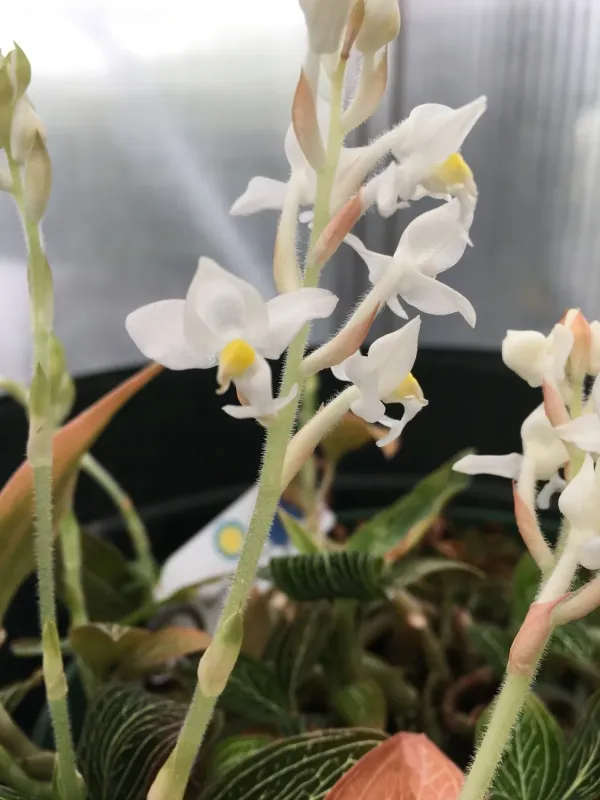
Ludisia discolor, belonging to the Orchidaceae family, is widely recognized as the most common species of the so-called jewel orchids. Native to the tropical forests of Southeast Asia, it thrives in environments characterized by filtered light and constant moisture.
The plant is prized for its ornamental foliage, which features a dark, velvet-like texture with intricate longitudinal veins in shades of gold or copper. Unlike many other orchids, it is a terrestrial species that grows on the forest floor, spreading through creeping stems.
Cultivation requirements include a stable, temperate climate with ideal temperatures between 20°C and 25°C. It is strictly recommended to avoid direct sunlight, which can quickly dehydrate and burn the sensitive, fleshy leaves of the plant.
The soil substrate must be highly porous and moisture-retentive but never soggy. A mix consisting of sphagnum moss, perlite, and fine bark is ideal for maintaining the delicate balance between hydration and proper aeration of the root system.
Standard agronomic practices for this species focus on maintaining high ambient humidity and moderate watering. Proper care requires protecting the plant from drafts and temperature fluctuations, which can trigger early senescence and leaf drop.
Main diseases and pests
The main pests threatening this culture are spider mites and scale insects. These pests often infiltrate the plant during the winter months if the indoor heating system makes the air excessively dry, requiring prompt application of insecticidal treatments.
Pathogenic fungi are a significant threat, usually caused by overwatering or poor drainage. Root rot is the most common condition leading to plant failure, often signaled by the yellowing and wilting of the stem and leaves.