
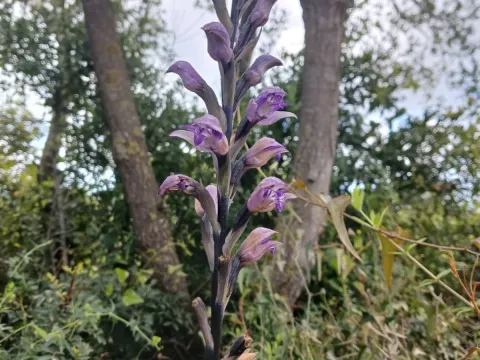
Limodorum
Limodorum
Limodorum is a genus of leafless, achlorophyllous mycoheterotrophic plants belonging to the Orchidaceae family. It does not perform photosynthesis, relying entirely on a symbiotic relationship with mycorrhizal fungi.
What the section contains


Limodorum
The plant derives its nutrients through complex fungal networks associated with forest trees. This biological dependency makes it impossible to treat Limodorum as a traditional agricultural crop, as it cannot be cultivated without its fungal partner.
Native to the forests of Europe and the Mediterranean, the plant requires specific soil conditions and deep leaf litter to thrive. It is extremely sensitive to microclimate fluctuations in its natural habitat.
Botanically, Limodorum is recognized by its distinct purple flowers and underground rhizomes. It spends most of its life cycle below the surface, emerging only during the flowering period to propagate.
In modern agricultural science, this species is strictly protected and observed rather than utilized. Its ecological presence serves as an indicator of the health and stability of the forest ecosystem.
The primary threat to Limodorum populations is habitat loss due to deforestation and land development. Any removal of host trees disrupts the fungal symbiosis necessary for the plant's survival.
Slugs and snails are common pests that feed on the emerging flowering shoots. Because the plant has a limited capacity for regrowth, significant damage can prevent seed set for the entire season.
Fungal infections in the soil can be detrimental, especially when triggered by environmental changes such as altered pH levels or soil contamination. These infections directly target the rhizome and the delicate root network.
Pollution from industrial or agricultural runoff affects soil chemistry, often leading to the decline of mycorrhizal fungi. Without these fungal partners, the plant cannot acquire nutrients and eventually perishes.
Human interference, including illegal collection and trampling in protected habitats, poses a serious risk to small, isolated populations. Strict conservation measures are required to ensure the species' survival.