
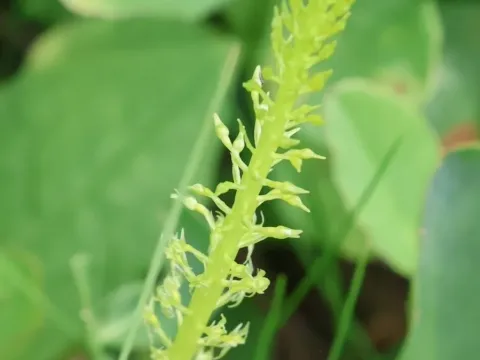
Malaxis
Malaxis
Malaxis is a genus of perennial herbaceous plants belonging to the Orchidaceae family. With a wide distribution ranging from temperate regions to the tropics, these plants have evolved to colonize diverse ecological niches, preferring moist and shady environments.
What the section contains
 Green adder's mouth orchid
Malaxis unifolia
Green adder's mouth orchid
Malaxis unifolia
 Malaxis abieticola
Malaxis bayardii
Malaxis bayardii
Malaxis abieticola
Malaxis abieticola
Malaxis bayardii
Malaxis bayardii
 Malaxis brachystachys
Malaxis brachystachys
Malaxis brachystachys
 Malaxis ehrenbergii
Malaxis ehrenbergii
Malaxis ehrenbergii
 Malaxis macrostachya
Malaxis macrostachya
Malaxis macrostachya
 Malaxis major
Malaxis major
Malaxis major
 Malaxis massonii
Malaxis massonii
Malaxis massonii
 Malaxis muscifera
Malaxis muscifera
Malaxis muscifera
 Malaxis spicata
Malaxis spicata
Malaxis spicata
 Malaxis versicolor
Malaxis versicolor
Malaxis versicolor
 Malaxis wendtii
Malaxis wendtii
Malaxis wendtii
 One-leaf adder's mouth
Malaxis monophyllos
One-leaf adder's mouth
Malaxis monophyllos
Malaxis
The morphology of Malaxis is characterized by sympodial growth with distinct pseudobulbs that store essential nutrients. The leaves are typically few in number, featuring characteristic longitudinal pleats that differentiate them from other terrestrial orchid species.
Successful cultivation of Malaxis requires strict adherence to environmental parameters, particularly in terms of light intensity. These plants are shade-loving and suffer from chlorophyll degradation when exposed to high-intensity sunlight, requiring 50-70% shade cloth in greenhouse settings.
The growth medium must be highly porous and moisture-retentive but never waterlogged. A professional mix usually consists of fine-grade bark, perlite, and sphagnum moss, which promotes healthy root development and prevents the accumulation of salts or excessive moisture.
Environmental management involves maintaining consistent humidity levels between 60% and 80%. Temperature regulation is equally vital, as Malaxis species generally favor moderate temperatures and show stress reactions if subjected to extreme heat or cold fluctuations.
Root and crown rot represent the most significant threat to the Malaxis population. These conditions are primarily caused by fungal pathogens such as Pythium and Rhizoctonia, which proliferate in poorly aerated or overly saturated potting substrates.
Insect pests, including spider mites and thrips, frequently target the succulent foliage of the plants. Integrated pest management strategies, such as using horticultural oils or systemic insecticides, are necessary to maintain crop health and prevent viral transmission through vector insects.