
Houlletia
Houlletia
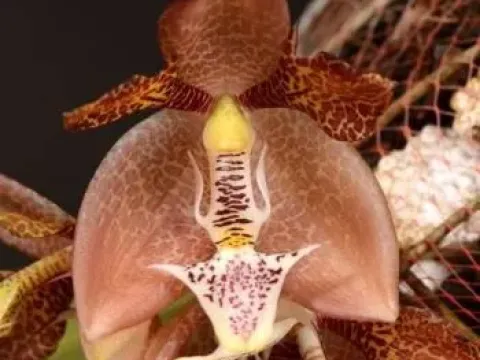
Houlletia is a genus of epiphytic orchids belonging to the Orchidaceae family. In their natural habitat, these plants are found in the humid tropical forests of Central and South America, including regions in Brazil, Colombia, and Peru.
What the section contains

Houlletia
Botanically, Houlletia is a sympodial orchid characterized by ovoid pseudobulbs that support a single large, pleated leaf. The most distinct features are their inflorescences: long, often pendulous spikes bearing showy, fleshy flowers with complex structures.
For successful cultivation, Houlletia requires strict adherence to temperature regimes typical of cool to intermediate tropical environments. Plants need high air humidity (70% or more) and constant air circulation to prevent fungal infections.
The ideal substrate for Houlletia is a mixture of conifer bark, sphagnum moss, charcoal, and perlite. Providing excellent drainage is critical, as the roots of this orchid are highly sensitive to waterlogging, which quickly leads to root rot.
Lighting for Houlletia should be diffused but bright. Direct sunlight is harmful to the foliage and causes severe burns, so it is recommended to place the plants in east or west-facing positions with appropriate shading during the summer months.
The main threats to Houlletia are related to improper watering and humidity levels. Stagnant water in the substrate inevitably leads to bacterial and fungal rots that affect both the pseudobulbs and the delicate root system.
Among pests, spider mites and scale insects pose the greatest danger, as they proliferate rapidly in low-humidity conditions. Regular inspection of the undersides of the leaves is essential for early pest detection.
Mealybugs are another common nuisance, infesting leaf axils and new growths. If detected, it is recommended to use specialized insecticides or acaricides, strictly following the manufacturer’s dosage for orchids.
Fusarium wilt and various leaf spots can occur when ventilation is poor. Treatment involves removing affected parts, applying fungicides, and strictly correcting the indoor microclimate parameters.
Disease prevention is based on keeping tools sanitized, using high-quality substrates, and avoiding direct water contact with the growth points of new shoots to prevent crown rot.