
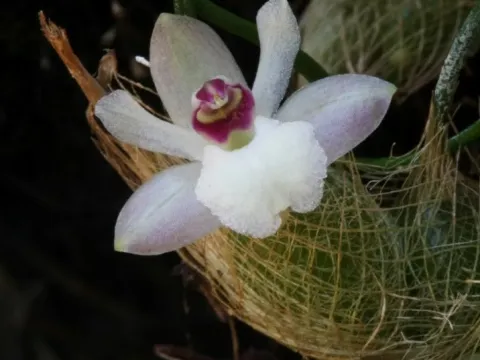
Isabelia
Isabelia
Isabelia is a genus of epiphytic orchids belonging to the Orchidaceae family. These plants are native to the tropical forests of South America, with the majority of species originating from Brazil.
What the section contains


Isabelia
The culture thrives in environments that mimic tropical conditions, requiring high humidity levels of 60–80%. Proper air circulation is critical to prevent moisture stagnation, which is a common cause of health issues in these orchids.
Isabelia requires moderate temperatures to sustain growth. Day temperatures should ideally range between +20°C and +25°C, while a slight drop in nighttime temperatures is beneficial for the plant's metabolic processes and flowering cycle.
For substrate, a well-draining mixture of pine bark, sphagnum moss, and charcoal is recommended. Given their epiphytic nature, these plants often perform best when mounted on cork slabs or placed in wooden baskets for optimal aeration.
Lighting should be bright but filtered to protect the foliage. Direct sunlight can cause severe damage to the plant tissue, leading to leaf scorching and potential loss of the plant if exposure persists over extended periods.
Pests such as spider mites and mealybugs are the primary threats to Isabelia. These insects flourish in dry environments, making consistent humidity management the most effective strategy for preventative control.
Root rot is the most common disease encountered by growers, typically resulting from overwatering or a degraded substrate that remains waterlogged for too long, effectively cutting off the oxygen supply to the roots.
Bacterial leaf spotting can occur if the foliage is kept wet for too long in cool, poorly ventilated spaces. Keeping the leaves dry and ensuring constant air movement helps to mitigate the risk of these infections significantly.
Improper fertilization can lead to nutrient toxicity or deficiency, which manifests as stunted growth or leaf chlorosis. It is essential to use fertilizers specifically formulated for epiphytic orchids at diluted concentrations.
Regular inspection of the plant is necessary to catch infestations early. When repotting or treating for pests, handle the delicate root system with extreme care to avoid mechanical damage that could serve as entry points for pathogens.