
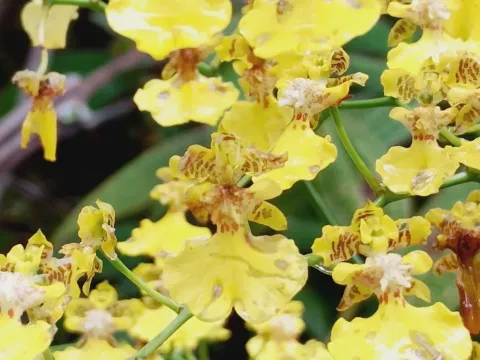
Gomesa
Gomesa R. Br.
Gomesa is a genus of epiphytic plants belonging to the Orchidaceae family. These plants are native to the tropical forests of South America, where they predominantly grow on the trunks and branches of trees, absorbing nutrients from rainfall and organic debris.
What the section contains


Gomesa
Successful cultivation of Gomesa requires tropical conditions, specifically high relative humidity levels, typically between 60% and 70%. Proper air ventilation is essential to mimic the natural canopy environment and prevent moisture-related issues on the leaves.
The plant prefers bright, indirect light. Placing the orchid in direct sunlight can cause leaf scorching, while insufficient light may prevent the plant from blooming. Moderate temperatures with a distinct diurnal fluctuation are highly beneficial for the plant's metabolism.
A specialized orchid substrate is crucial for healthy growth. It should be composed of well-draining materials such as pine bark, charcoal, perlite, and sphagnum moss. This composition ensures that roots receive enough oxygen while retaining the necessary amount of moisture.
Gomesa is cultivated primarily as an ornamental plant. It is prized by hobbyists for its elegant, arching flower spikes that carry numerous small, fragrant blossoms, making it a desirable specimen for indoor botanical collections and conservatories.
The primary threats to Gomesa are fungal and bacterial rots, often triggered by overwatering or poor drainage. Excess water accumulating in the leaf axils or root zones creates an environment conducive to the rapid spread of pathogens.
Scale insects and mealybugs are common pests that attack the leaves and stems of the orchid. These pests feed on plant sap, weakening the orchid and leaving it susceptible to secondary viral or bacterial infections.
Spider mites can also infest the plant, particularly in dry and poorly ventilated conditions. Their presence is identified by fine webs and stippling on the leaves, which can lead to premature leaf drop if not managed promptly.
Root system health is vital; therefore, excessive salt buildup from hard water or over-fertilization must be avoided. Regular flushing of the substrate with clean, mineral-poor water is recommended to maintain a healthy root environment.
Prevention involves strict hygiene protocols, such as cleaning gardening tools between uses and isolating new plants before introducing them to an established collection. Chemical control should only be used when biological or mechanical measures prove insufficient.