
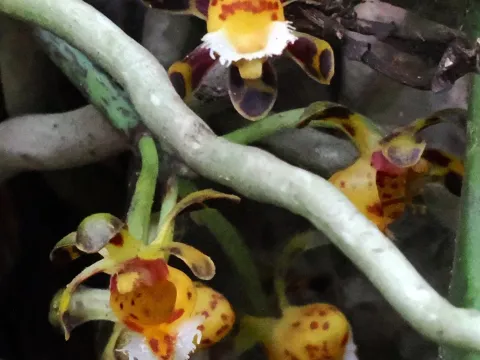
Gastrochilus
Gastrochilus
Gastrochilus is a fascinating genus of epiphytic orchids belonging to the Orchidaceae family. These plants are native to the tropical forests of Asia, ranging from the Himalayas to China and Southeast Asia, where they naturally inhabit tree trunks and branches.
What the section contains


Gastrochilus
Botanically, Gastrochilus species are characterized by their compact growth habit with monopodial stems and bifacial, often leathery leaves. Their root systems are highly specialized, capable of absorbing moisture and nutrients directly from the surrounding humid air.
Successful cultivation requires mimicking the tropical environment. High humidity, ideally between 60% and 80%, is essential for the plant to thrive. In indoor settings, consistent air movement is crucial to prevent fungal issues while maintaining high moisture levels.
Light requirements for Gastrochilus are moderate. They prefer bright, filtered light and should never be exposed to harsh, direct sunlight, which can quickly cause leaf scorch. An east-facing window or light shading is usually optimal.
The potting medium must be extremely well-draining, as the roots are highly susceptible to rot if suffocated. Most growers prefer mounting these orchids on cork slabs or using open-basket setups filled with high-quality coniferous bark.
The primary threat to the health of Gastrochilus is root and stem rot. These conditions are typically caused by stagnant water or overwatering, especially in environments where temperatures drop and airflow is insufficient to dry the plant out.
Spider mites represent a major pest risk, especially in low-humidity conditions. They pierce the leaf cells to feed on plant sap, leading to stippling, discoloration, and, if left untreated, the eventual death of the affected foliage.
Scale insects are also problematic for this genus. These pests hide in the crevices of the stem or at the base of the leaves, making them difficult to detect. They weaken the orchid and secrete honeydew that promotes the growth of sooty mold.
Effective management involves regular manual inspection and cleaning of the foliage. If infestations occur, systemic insecticides or horticultural oils may be required, provided they are applied at correct concentrations to avoid chemical burn.
Fungal diseases can also be managed by maintaining high hygiene in the growing space. Removing dead leaves and ensuring that the irrigation water is free of excessive salts or minerals will significantly contribute to the long-term vitality of the orchid.