
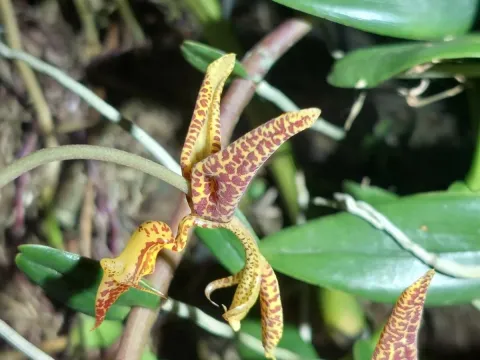
Gongora
Gongora
Gongora is a genus of epiphytic orchids belonging to the Orchidaceae family. These fascinating plants are native to the tropical rainforests of Central and South America, where they typically thrive in humid, shaded environments on tree branches.
What the section contains


Gongora
The botanical structure of Gongora includes dense, ridged pseudobulbs that support elongated, lanceolate leaves. The most distinctive feature of the genus is the pendent, pendulous inflorescence that bears numerous small, complex, and often fragrant flowers.
To cultivate Gongora successfully, one must replicate its natural tropical habitat. This requires consistently high humidity levels, ideally maintained between 70% and 80%, accompanied by excellent air circulation to prevent fungal growth.
Light requirements involve bright but indirect sunlight. Direct tropical sun can quickly scorch the delicate foliage, so placing the plant in a shaded area or using a light-filtering screen is essential during the brightest hours of the day.
The potting medium must provide superb drainage and aeration. Because of their arching and pendent flower spikes, these orchids are best grown in open-slatted wooden baskets lined with sphagnum moss or high-quality orchid bark.
Gongora orchids are susceptible to common greenhouse pests such as spider mites, aphids, and scale insects. These pests often congregate on new vegetative growth or flower buds, draining the plant's resources.
Fungal infections, particularly root rot, represent the most significant threat to the health of the plant. These diseases are usually triggered by stagnant water in the pot or poor ventilation, leading to the rapid decay of the pseudobulbs.
Effective management includes regular inspection of the leaf axils and the root system. If pests are detected, immediate treatment with horticultural oils or mild systemic insecticides is recommended to prevent spreading.
To prevent disease, it is critical to ensure that the potting medium is not overly compacted. Ensuring that the roots can dry out slightly between waterings is one of the most effective ways to prevent bacterial rot.
Maintaining high hygiene standards in the growing area, including the removal of dead leaves and debris, significantly reduces the population of pests and the risk of pathogen accumulation around the root zone.