
Gomesa flexuosa
Gomesa flexuosa (hort. Lodd.) M. W. Chase & N. H. Williams
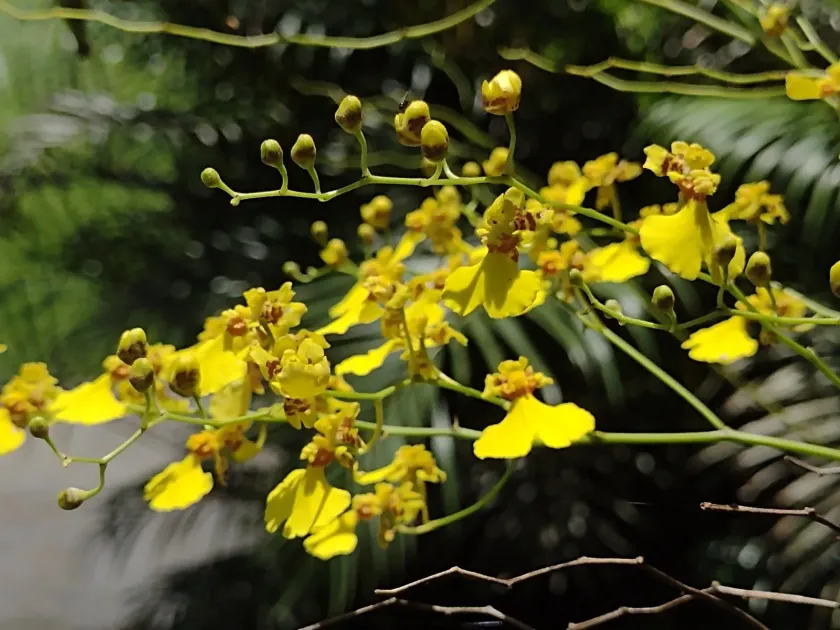
Description
Growing requirements
Gomesa flexuosa is a sympodial epiphytic orchid belonging to the Orchidaceae family. Native to the humid rainforests of Brazil, this species naturally thrives in high-canopy environments, attaching itself to trees to capture moisture and nutrients from the tropical air.
The plant is characterized by its small, smooth, oval pseudobulbs, which act as water storage organs. Long, slender, arching leaves emerge from these pseudobulbs, giving the plant its distinct aesthetic appeal. Its root system is delicate and highly adapted to air exposure.
Environmental requirements include bright, indirect light, mimicking the filtered canopy light of its native habitat. Strong, direct sunlight is detrimental to the foliage and may cause scorched leaves, therefore shading is essential during high-intensity periods.
Temperature management should be moderate, with day temperatures ranging from 18 to 24 degrees Celsius. It requires a relatively high humidity level, ideally around 60–80 percent, which can be maintained through misting or using ultrasonic humidifiers in indoor settings.
Proper aeration of the root zone is critical. The recommended planting medium consists of high-quality pine bark chips, charcoal, and a small amount of sphagnum moss to retain essential humidity without causing compaction or waterlogging of the roots.
Main diseases and pests
The most common health issues involve fungal infections related to root rot and pseudobulb decay. These are typically caused by stagnant water or inadequate airflow, which compromise the health of the root system and plant structure.
Scale insects and mealybugs are the primary pests that affect this orchid species. They often hide under leaves or around the base of the pseudobulbs, requiring diligent manual monitoring or the application of specific horticultural oils to manage populations.
Spider mites can become a significant threat during periods of low indoor humidity. These tiny pests cause yellowing and fine webbing on the leaves, which can be mitigated by increasing humidity levels and using appropriate miticides.
Bacterial soft rot can occur if water remains in the leaf axils for extended periods, especially in cooler, poorly ventilated environments. To prevent this, ensure that the plant dries off sufficiently during the nighttime hours.
Improper fertilization practices often lead to salt accumulation in the substrate. To prevent this, it is recommended to flush the orchid pot with clear water at least once a month to remove mineral deposits and keep the roots healthy.