
Dilomilis montana
Dilomilis montana
Description
Growing requirements
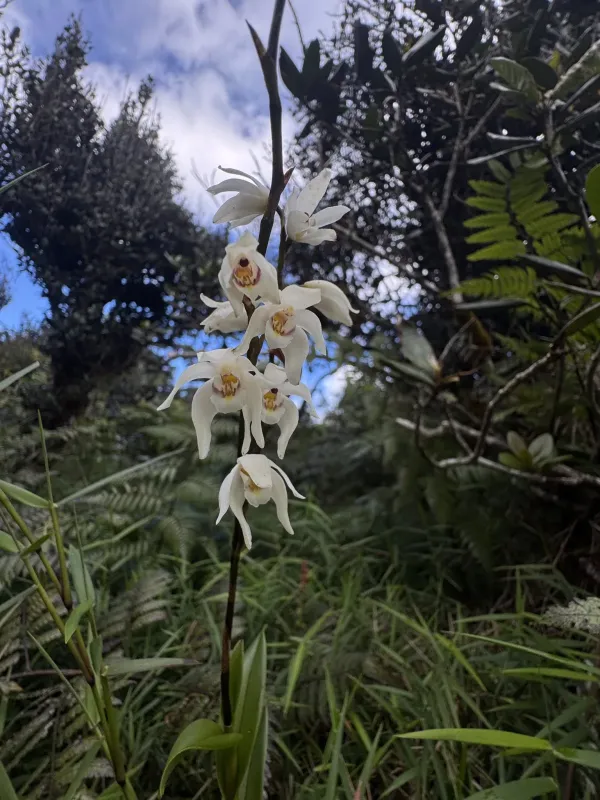
Dilomilis montana is a unique orchid species belonging to the Orchidaceae family, native to the mountainous cloud forests of the Caribbean, particularly Cuba. As an epiphyte or lithophyte, it has evolved to thrive in high-altitude environments where humidity is high and temperatures remain relatively cool throughout the year.
The plant features sympodial growth, with dense pseudobulbs that store water and nutrients, supporting narrow, leathery leaves. Its inflorescences carry delicate, pale-colored flowers that are highly appreciated in orchid collections for their elegance and structural complexity.
Cultivating Dilomilis montana requires careful attention to thermal dynamics; it prefers a temperature range between 18°C and 24°C, with a significant drop in temperature during the night to mimic natural mountainous conditions. Excessive heat can stress the plant and inhibit proper flower development.
The root system requires an airy and well-draining substrate to prevent suffocation. A mixture of pine bark, perlite, and charcoal is ideal for providing the necessary aeration. It is crucial to avoid potting the plant in standard soil, as this will lead to rapid root decay and plant mortality.
Humidity management is vital, with an optimal range between 60% and 80%. In greenhouse conditions, consistent air movement is necessary to prevent stagnant moisture, which can harbor pathogens. Regular, light misting and good ventilation are key to maintaining the plant's health throughout the year.
Main diseases and pests
Root rot remains the most significant threat to Dilomilis montana, usually caused by overwatering or poor drainage systems. Identifying the early signs of yellowing leaves or soft, mushy pseudobulbs is essential to take corrective action before the plant enters a terminal decline.
Pests such as spider mites are particularly common in indoor environments where air humidity is low. They feed on the underside of leaves, causing discoloration and eventual loss of foliage if left untreated. Regular inspection and increasing humidity are effective preventative measures.
Mealybugs are another common challenge, appearing as white, cotton-like masses in the nooks and crannies of the plant. These pests sap the plant's vigor, making it more susceptible to opportunistic fungal infections, and should be treated immediately with horticultural oils or systematic insecticides.
Bacterial leaf spots can occur when water sits on the leaves for too long in cool conditions. To prevent this, always ensure that foliage is dry before nightfall and keep the environment clean, removing any dead leaf tissue or organic debris that could provide a substrate for bacteria.
Over-fertilization can lead to root burn and distorted growth in this sensitive orchid. It is recommended to use a balanced, weak fertilizer solution during the active growth phase and to flush the substrate periodically with clean, pure water to prevent the accumulation of harmful mineral salts.