
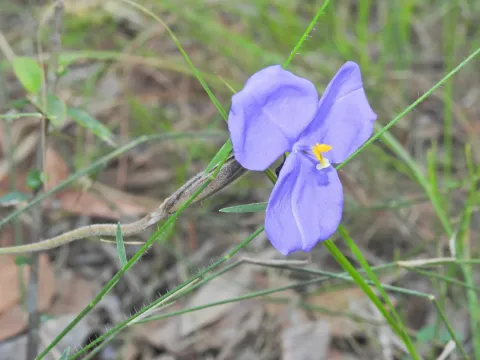
Patersonia
Patersonia
Patersonia is a genus of perennial herbs belonging to the Iridaceae family. Native primarily to Australia and the surrounding regions, these plants are well-adapted to specific climatic conditions, often characterized by distinct wet and dry seasons.
What the section contains

Patersonia
Botanically, Patersonia is defined by its basal, linear leaves and terminal flowers, which are often short-lived but produced in succession. The plants form dense clumps or tussocks, making them a popular choice for structured garden designs that require year-round texture.
For optimal growth, the soil must be well-drained and nutrient-poor, mimicking the natural conditions of their native habitat. Excessive fertilization often leads to leggy growth and reduced flowering, therefore a minimalist approach to soil amendments is recommended.
The climate requirements for Patersonia involve a need for bright, direct light. While some species show resilience to light frost, prolonged exposure to freezing temperatures can cause significant damage to the sensitive crown of the plant.
In terms of horticultural use, Patersonia is highly valued for its drought tolerance once established. It is frequently incorporated into rock gardens and xeriscapes, providing a touch of native beauty and structural integrity to water-wise garden schemes.
Root rot is the most significant threat to Patersonia, almost always caused by poor drainage or overwatering. Maintaining a porous soil medium and ensuring proper air circulation around the base of the plant are critical preventative measures against fungal pathogens.
Pests such as mites and aphids can occasionally infest the foliage, especially in greenhouse conditions. Monitoring for signs of leaf distortion or discolouration allows for early intervention using horticultural soaps or targeted biological controls.