
Patersonia fragilis
Patersonia fragilis
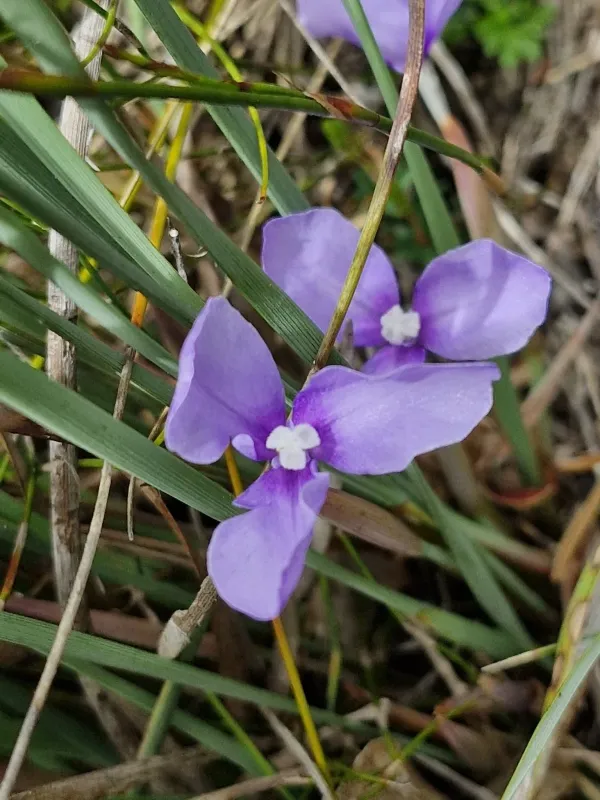
Description
Growing requirements
Patersonia fragilis, commonly known as the short purple-flag, is a perennial herbaceous plant belonging to the Iridaceae family. This species is native to Australia, where it primarily inhabits wet, sandy, or peaty environments, often found in heathlands and coastal plains.
The plant features distinct grass-like, rigid, linear leaves emerging from a dense base. Its botanical morphology allows it to thrive in nutrient-poor environments, where it develops specialized rhizomes that provide stability and nutrient storage, characteristic of many iridaceous plants.
Successful cultivation requires specific soil conditions, specifically acidic, sandy, or boggy soils that maintain high moisture content. Drainage is also essential to ensure that the roots do not rot during the colder months while maintaining consistent hydration during the growing season.
Regarding climate, this plant prefers temperate to warm conditions with high light exposure. While it can withstand some variation in temperatures, it is highly sensitive to extreme drought and prolonged moisture deficit, which can severely inhibit its vegetative growth and floral display.
The primary use of Patersonia fragilis is in ornamental horticulture, particularly in wild-style gardens or rockeries that require native vegetation. Its vibrant violet-blue flowers provide significant aesthetic value, making it an attractive choice for specialized garden beds.