
Petra Iris
Iris petrana
Description
Growing requirements
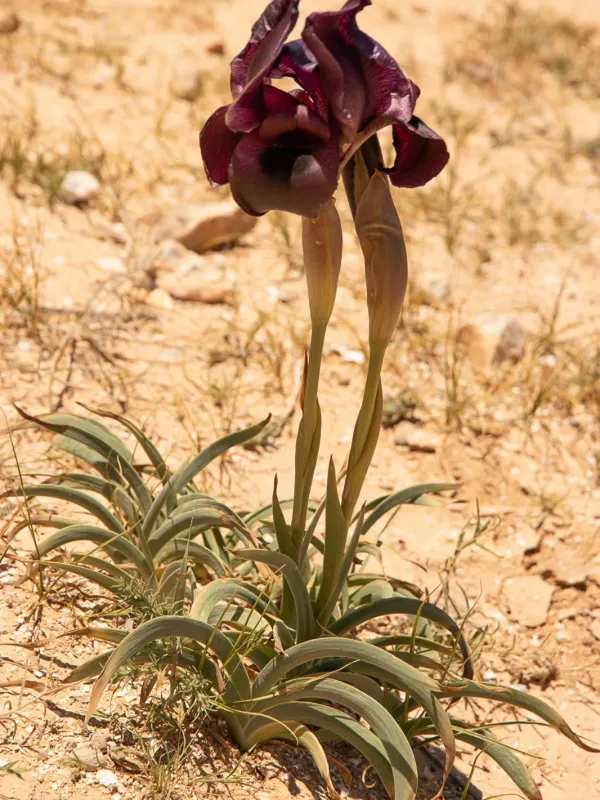
The Petra Iris (Iris petrana) is a rare species of perennial herbaceous plant belonging to the Iridaceae family. Native to the arid, rocky landscapes of Jordan, this plant is a specialized xerophyte adapted to survive in extreme desert conditions.
As a member of the Oncocyclus iris group, the Petra Iris features large, striking flowers and requires a specific dormancy phase during the hot, dry summer months. Its biological rhythm is strictly tied to the seasonal precipitation cycles of its native environment.
For successful cultivation, the soil must be exceptionally well-drained, resembling the stony slopes of its natural habitat. Heavy or organic-rich soils are unsuitable, as they retain too much moisture and inevitably lead to the decay of the root system.
The ideal substrate consists of a sandy-loam base mixed with significant proportions of gravel or crushed limestone. This composition ensures proper aeration and prevents waterlogging, which is the primary cause of plant failure in artificial environments.
High light intensity is essential for the healthy growth and blooming of this iris. In controlled settings such as greenhouses, proper ventilation must be maintained to prevent excessive humidity and to keep the soil temperature within a favorable range for the bulbs.
Main diseases and pests
Fungal and bacterial rots are the most significant threats to the Petra Iris, often triggered by improper irrigation or poor drainage. These pathogens rapidly destroy the rhizomes, especially when the plant is transitioning into its period of dormancy.
Pests such as root mites, thrips, and aphids represent a secondary threat that can severely weaken the plant. Infestations often coincide with periods of environmental stress, making the iris more susceptible to secondary viral or fungal infections.
Effective management involves maintaining strict soil hygiene and ensuring that the substrate is thoroughly dried between waterings. Removing any decaying tissue immediately is a standard practice to prevent the spread of localized infections to healthy plant parts.
Preventive application of systemic fungicides and insecticides should be performed cautiously, prioritizing biological control methods where possible. Avoiding mechanical damage to the rhizomes during maintenance is crucial, as any injury serves as an entry point for pathogens.
As an endemic and vulnerable species, the conservation of the Petra Iris in agricultural settings relies on precise microclimate control. Reducing humidity levels during the dormancy phase is the most effective cultural practice to protect the health of the rhizomes.